
Marzipan vs Almond Paste: What’s the Difference? (How to Make Both!)

This post may contain affiliate links. Please see my Disclosure, Privacy and Terms of Use for more information.
Are marzipan and almond paste the same thing? It’s one of the most common questions I get, and the answer is no! They’re close cousins, both made from almonds and sugar, but they have different textures, different sweetness, and very different jobs in the kitchen. Use the wrong one, and your bear claws or cake covering won’t turn out the way you hoped.
In this post, I’ll show you exactly how they’re different, what each one is used for, and how to make both from scratch at home. It’s much easier than you’d think, and homemade tastes so much better than store-bought.
Watch Me Make This Recipe!
Why You’ll Love Making Your Own
Homemade marzipan and almond paste are simple to make and so much fresher than the store-bought kind. Here’s why you’ll want to try them:
- Just a few ingredients. Almonds, powdered sugar, almond extract, and a little liquid.
- Ready in minutes. A food processor does most of the work.
- Fresher flavor. Homemade has a richer, real almond taste.
- Saves money. Store-bought almond paste and marzipan can be pricey.
- You control the sweetness. Make it just the way you like it.
Growing Up With Marzipan

I grew up with marzipan. For as long as I can remember, once a year our bakery in town would sell marzipan shaped like a big pig. My mom would go and buy a big slice, about the size of a slice of bread, just a little thicker. She would nibble on it for a week or so. That was her very special treat.
About 4 to 6 weeks before the holidays, my mom would also stock up on Marzipan Potatoes (you’ll find my recipe here on the blog), along with all kinds of gingerbread cookies. She always bought them early, because in Germany, all the stores close over the Christmas holidays. Everyone stays home, and the whole family is together. It’s such a special, peaceful feeling. To this day, the taste of marzipan brings back that warm, cozy feeling of being home with my family.

Back in Germany, I never really heard much about almond paste. We used marzipan for just about everything, in all kinds of different ways. It wasn’t until I came to the United States and started working at a German bakery in St. Pete Beach, Florida, that I learned about almond paste and the difference between the two. They’re two different, but closely related, products, and today I’m sharing everything I learned with you.

Marzipan vs Almond Paste: What’s the Difference?
Marzipan and almond paste are both made from ground almonds and sugar, but they’re made differently and used for different things. Here’s an easy way to tell them apart.
Almond Paste
- Texture: Soft, a little coarse, and easy to spread.
- Sweetness: Less sweet, with a stronger almond flavor.
- Main use: Baking. It goes inside things.
- Used in: Pastries like bear claws, plus cookies, cakes, and desserts.
Marzipan
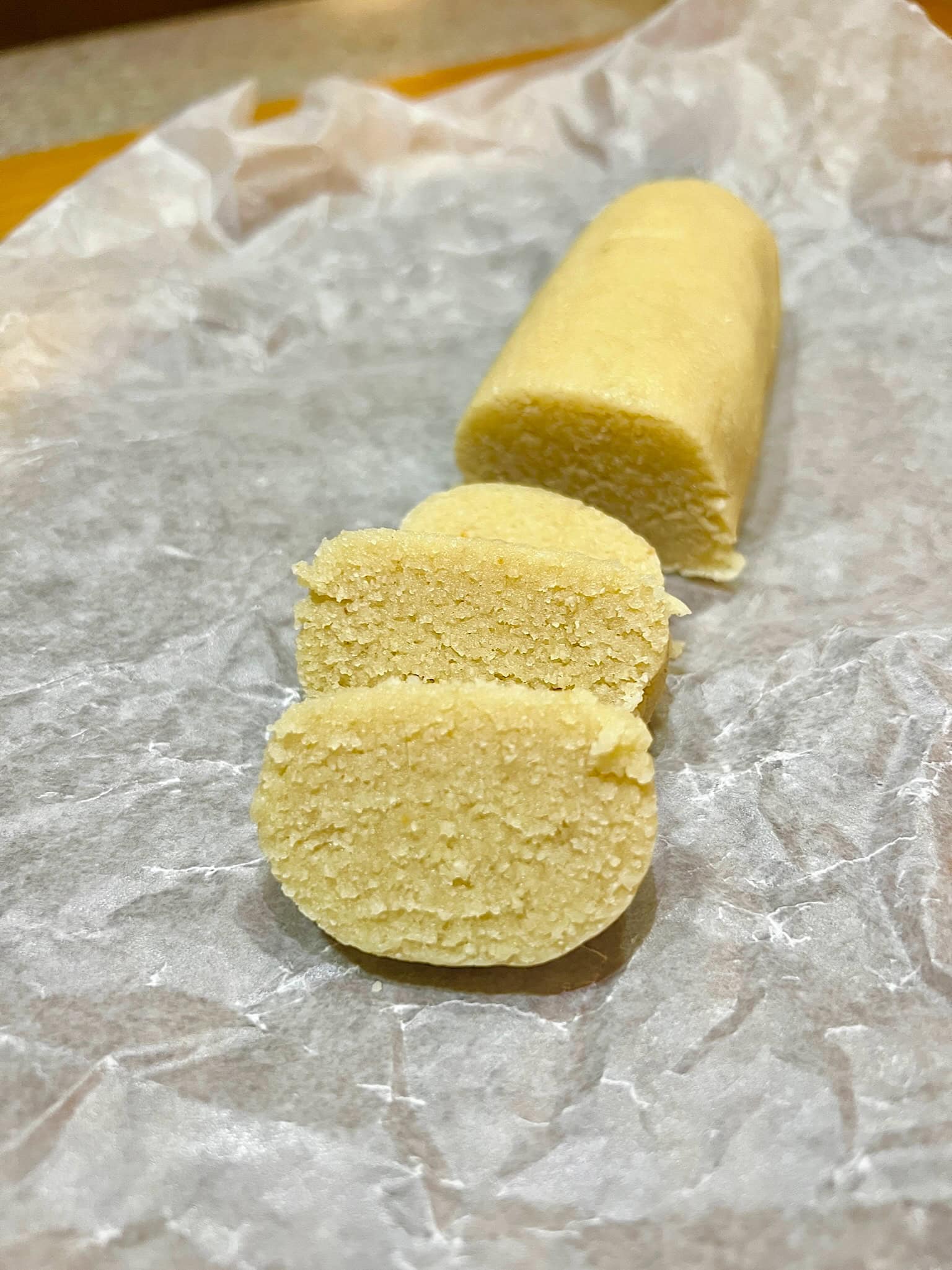
- Texture: Smooth, firm, and holds its shape. Almost like modeling clay.
- Sweetness: Sweeter than almond paste.
- Main use: Covering cakes and making candy. It goes on top of things or is eaten by itself.
- Used in: Cake coverings, like the green layer on a Swedish Princess Cake, marzipan fruits and flowers, and candies like Marzipan Potatoes.
Here’s a fun fact: long before fondant became popular, bakers were covering cakes with marzipan. You could call it the original fondant! It can be colored with food coloring and shaped into little fruits, flowers, and animals. In Germany, marzipan pigs are even a traditional good-luck gift for the New Year.
Why Is Marzipan Sweeter?
In Germany, all marzipan starts with something called Marzipanrohmasse, or raw marzipan paste. It’s made of 65% almonds and only 35% sugar, so it’s a lot like American almond paste. To turn it into marzipan for candies and shapes, more powdered sugar is kneaded in. That extra sugar makes it sweeter, smoother, and easier to shape.
The famous Lübecker Marzipan, made in the German city of Lübeck, is 70% raw marzipan paste and 30% extra sugar. The extra-fine Lübecker Edelmarzipan has only 10% extra sugar, so it’s even more almondy.
And here’s one more fun fact: in the UK, “marzipan” and “almond paste” mean the same thing, while in the U.S. they’re two different products. No wonder so many people get confused!
Ingredients You Need
Both recipes use almost the same simple ingredients. Here’s what each one does.
- Almond flour or blanched almonds: The base of both recipes. You can buy blanched almond flour, or grind blanched slivered almonds yourself. About 3 cups of slivered almonds makes enough for both recipes.
- Powdered sugar: Sweetens and helps bind everything together. It dissolves smoothly, so you don’t get a gritty texture.
- Almond extract: Boosts the almond flavor.
- Egg white (almond paste only): Holds the almond paste together and makes it soft and spreadable.
- Salt (almond paste only): Just a pinch to bring out the almond flavor.
- Water (marzipan only): Brings the marzipan together without egg, so it’s safe to eat as candy.
- Rose water (marzipan only, optional): Gives marzipan a classic, old-fashioned flavor. It has a very strong taste, so if you’re not sure you’ll like it, leave it out. Make sure it’s food-grade rose water.
Equipment You Need
You only need a few tools to make both recipes. Here’s what I use:
- Food processor: For grinding the almonds and mixing the dough. I use my Ninja chopper.
- Measuring cups and spoons: For measuring everything exactly.
- Rubber spatula: For scraping down the sides of the food processor.
- Glass bowl: For working in extra almond flour if needed.
- Cutting board: For kneading the dough with your hands.
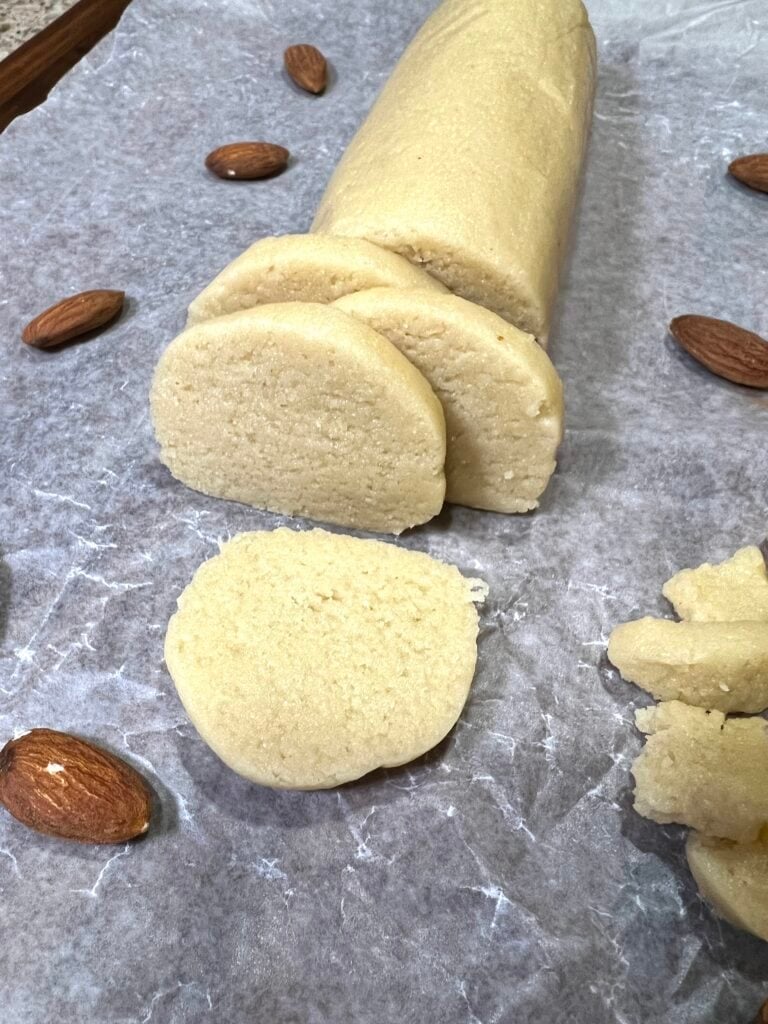
How to Make Almond Paste
Almond paste comes together in just a few minutes. Here’s how to make it.
1: Grind the almonds. If you’re using blanched slivered almonds, pulse them in a food processor until they look like fine sand. Feel it with your fingers. If it’s still too coarse, keep pulsing a little longer. Don’t over-grind, or the almonds will start to turn into almond butter. Pour the ground almonds into a bowl.
2: Mix the almond flour and sugar. Add 2 cups of almond flour, 1½ cups of powdered sugar, and a pinch of salt to the food processor. Pulse until well mixed. Scrape down the sides if anything sticks.
3: Add the almond extract. Add 2 teaspoons of almond extract and pulse again.
4: Add the egg white. Add the slightly beaten egg white and pulse until the mixture starts to come together into a dough.
5: Adjust if needed. If the paste feels too wet or sticky, add a little more almond flour, a spoonful at a time. This happens when your egg is extra large.
6: Knead it. Move the almond paste to a bowl or board and knead it with your hands for a minute until it’s smooth and holds together.
7: Wrap and chill. Shape it into a ball or log, wrap it tightly in foil or plastic wrap, and refrigerate until you’re ready to use it.
How to Make Marzipan
Marzipan is made the same way, but without egg. You’ll notice it feels firmer and smoother than almond paste.
Step 1: Mix the almond flour and sugar. Add 1 cup of almond flour and 1 cup of powdered sugar to the food processor. Pulse until well mixed.
Step 2: Add the flavors. Add ½ teaspoon of almond extract and ¼ teaspoon of rose water, if using.
Step 3: Add the water. Add 1 tablespoon of water and pulse a few times.
Step 4: Adjust if needed. If it still looks dry and crumbly, add another teaspoon of water and pulse again until it comes together.
Step 5: Knead it. Turn the marzipan out onto a board and knead it with your hands until it’s smooth and firm.
Step 6: Wrap and chill. Shape it into a ball or log, wrap it tightly in foil or plastic wrap, and refrigerate until you’re ready to use it.
Debbie’s Tip
Always wrap it tightly. Both almond paste and marzipan dry out quickly when air gets to them. Wrap them well in foil or plastic wrap, and then put them in an airtight container or zip-top bag for extra protection. If your marzipan gets a little dry, knead in a few drops of water to soften it again.
Ways to Use Them
Now that you’ve made them, here are some delicious ways to use your homemade almond paste and marzipan.
Almond paste:
- Fill pastries like Almond Bear Claws or croissants.
- Bake into almond cookies or almond cake.
- Spread it under fruit in tarts and galettes.
Marzipan:
- Cover cakes, like a Swedish Princess Cake.
- Roll into Marzipan Potatoes.
- Color it and shape it into little fruits, flowers, or animals.
- Dip pieces in chocolate for an easy homemade candy.
Storage & Freezing
Homemade almond paste and marzipan keep well when they’re wrapped tightly.
- Fridge: Wrap tightly and store for 7 to 10 days.
- Freezer: Wrap in plastic wrap, then foil, and freeze for up to 3 months. Thaw in the fridge overnight.
- Before using: Let it sit at room temperature for a few minutes so it’s softer and easier to work with.
Important
Almond paste contains raw egg white. That’s fine when you bake it into pastries and cakes, because the oven cooks it. But if you want something to eat without baking, use marzipan instead, since it has no egg. You can also use pasteurized egg whites in the almond paste for extra peace of mind.
Frequently Asked Questions
Here are the questions I hear most about marzipan and almond paste.
Can I use marzipan instead of almond paste?
It’s not the best swap. Marzipan is sweeter and firmer, so pastries and cookies may turn out too sweet and won’t have the same soft, moist filling.
Can I use almond flour instead of grinding almonds?
Yes! Store-bought almond flour works great and saves time. Just make sure it’s made from blanched almonds for a light color.
Why is my almond paste too sticky?
Your egg white was probably extra large. Just knead in more almond flour, a little at a time, until it’s easy to handle.
Why is my marzipan crumbly?
It needs a little more water. Add 1 teaspoon at a time and knead until it comes together.
What does rose water do?
It gives marzipan a traditional, slightly floral flavor. It’s optional, and a little goes a long way.
Is almond paste the same as almond filling?
No. Almond filling, often sold in cans, is softer and sweeter and usually has other ingredients added. Almond paste is thicker and has a stronger almond flavor.
Can I color marzipan?
Yes! Knead in a few drops of gel food coloring until the color is even. Gel coloring works best because it won’t make the marzipan wet.
Why are marzipan and almond paste the same thing in some recipes?
In the UK, the two names mean the same product. In the U.S. and Germany, they’re two different things. If a recipe is from the UK, “almond paste” usually means marzipan.
More Recipes You’ll Love
Put your homemade almond paste and marzipan to good use with these recipes:
Happy Baking!
Marzipan and almond paste may look alike, but now you know they each have their own special job in the kitchen. Making them at home is quick, easy, and so much tastier than store-bought. Whether you’re filling bear claws or rolling marzipan potatoes, I hope you have fun with these little almond treasures. And if you want to see me make them, be sure to watch the video on my YouTube channel!
If you make them, I’d love to see them! Tag me on Instagram or pin this post to your baking board on Pinterest.
Enjoy every bite,

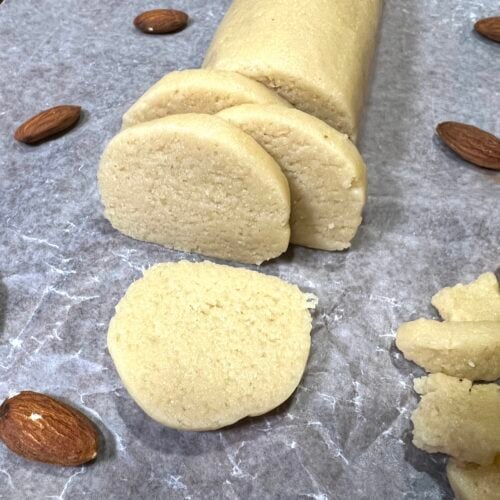
Homemade Almond Paste
Ingredients
- 2 cups blanched almond flour or finely ground blanched almonds
- 1 ½ cups powdered sugar
- 1 pinch salt
- 2 teaspoons almond extract
- 1 egg white slightly beaten
Instructions
- Mix: Pulse the almond flour, powdered sugar, and salt in a food processor until combined. Scrape down the sides as needed.
- Flavor: Add the almond extract and pulse again.
- Bind: Add the egg white and pulse until the mixture comes together.
- Adjust: If too wet, add more almond flour a spoonful at a time.
- Knead: Knead by hand on a board until smooth.
- Store: Shape into a ball or log, wrap tightly in foil, and refrigerate until ready to use.
Notes
- Contains raw egg white. Use in baked recipes, or use pasteurized egg whites.
- Keeps in the fridge for 7 to 10 days or the freezer for up to 3 months.
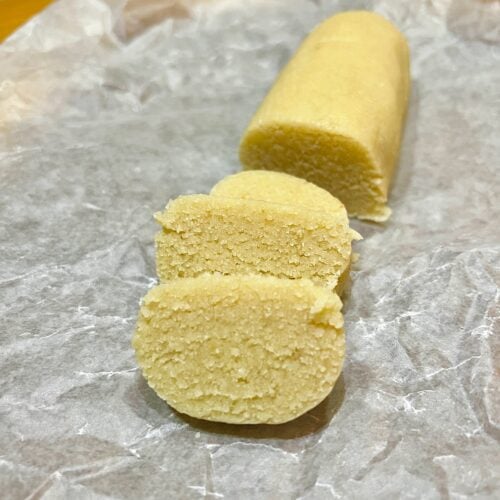
Homemade Marzipan (Eggless)
Ingredients
- 1 cup blanched almond flour or finely ground blanched almonds
- 1 cup powdered sugar
- ½ teaspoon almond extract
- ¼ teaspoon food-grade rose water optional
- 1 tablespoon water plus more if needed
Instructions
- Mix: Pulse the almond flour and powdered sugar in a food processor until combined.
- Flavor: Add the almond extract and rose water, if using.
- Add water: Add 1 tablespoon water and pulse a few times. If dry, add 1 more teaspoon water at a time.
- Knead: Turn out onto a board and knead until smooth and firm.
- Store: Shape into a ball or log, wrap tightly in foil, and refrigerate until ready to use.
Notes
- Rose water has a strong flavor. Leave it out if you’re unsure.
- Color with gel food coloring for shaping fruits and flowers.
- Keeps in the fridge for 7 to 10 days or the freezer for up to 3 months.