
Homemade Pasta: Simple and Delicious


This post may contain affiliate links. Please see my Disclosure, Privacy and Terms of Use for more information.
Homemade pasta dough is a simple, time-honored recipe that transforms just three humble ingredients—eggs, flour, and a pinch of salt—into culinary magic. With a little kneading and rolling, this versatile dough can be shaped into countless pasta varieties, including pappardelle, fettuccine, ravioli, and more. Creating pasta from scratch is not only straightforward but also deeply rewarding, offering a taste and texture that store-bought, boxed pasta simply cannot rival.
A Brief History of Pasta
Pasta’s origins trace back thousands of years, with early forms appearing in both Italy and Asia. While its exact birthplace remains debated, pasta as we know it today became a staple of Italian cuisine during the Middle Ages. The countless shapes and styles of pasta evolved over centuries, each tailored to specific regional ingredients and culinary traditions. For example, long noodles like spaghetti pair perfectly with light sauces, while ridged shapes like rigatoni excel at capturing hearty ragùs.
Why So Many Shapes?
The diversity of pasta shapes serves both aesthetic and practical purposes. Each shape is designed to complement a specific type of sauce, cooking method, or filling. For example, delicate strands of angel hair work well with light, oil-based sauces, while sturdy tubes of penne hold up to thick, chunky sauces. By tailoring pasta shapes to recipes, cooks maximize flavor and texture in every bite.
Why Choose Homemade?
Homemade pasta has a fresh, tender texture and richer flavor that boxed pasta simply can’t match. It absorbs sauces more effectively, creating a harmonious dish that elevates any meal. Making pasta at home also allows you to control ingredients, ensuring a wholesome and preservative-free result. Additionally, the process of making pasta can be a fun, hands-on activity to share with family or friends.
❄️ Storage & Freezing
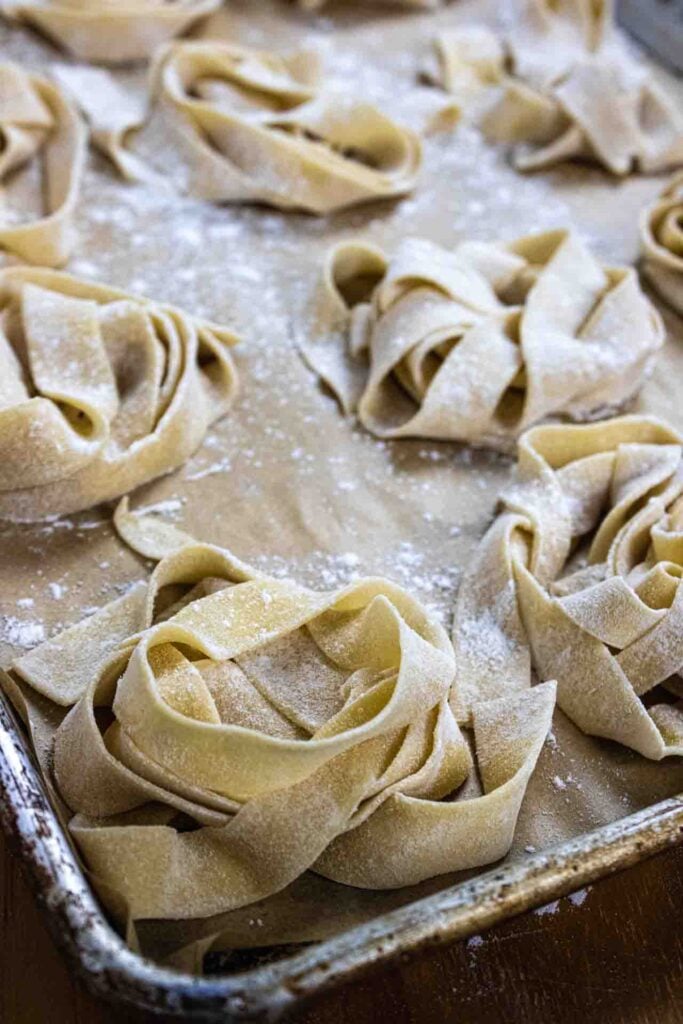
Fresh pasta can be stored in the refrigerator for up to two days. To prevent sticking, lightly dust it with flour and lay it in a single layer or nest small portions on a tray. For longer storage, homemade pasta can be frozen. Arrange the shaped pasta on a parchment-lined baking sheet, freeze until solid, then transfer to an airtight container or freezer bag. Frozen pasta will keep for up to three months and can be cooked directly from frozen — no thawing required.
Tips for Getting Started
Making pasta dough is simpler than it seems. Combine flour and salt on a clean surface, make a well in the center, and crack the eggs into the well. Slowly incorporate the flour into the eggs, then knead until smooth and elastic. Let the dough rest for 30 minutes before rolling it out and shaping it as desired. With practice, you’ll find it’s as quick as boiling boxed pasta — and infinitely more satisfying.
Homemade pasta is more than just a recipe; it’s a connection to tradition, creativity, and incredible flavor. Whether you’re crafting it for a special occasion or a quick weeknight meal, the process is as enjoyable as the result. Once you experience the taste and versatility of fresh pasta, you’ll see why it’s worth the small effort. So roll up your sleeves, grab some flour and eggs, and discover the joy of making pasta from scratch.
Happy Shaping,

Homemade Pasta: Simple and Delicious
Ingredients
- 3 eggs
- 2 cups flour
- 1/4 tsp salt
Instructions
- Measure out the flour and pour it out on the counter.
Make a little well in the middle for the eggs. - Crack in 3 eggs and sprinkle the salt over it.
- Use a fork and mix the eggs with the flour from inside to outside.
- Once you incorporated almost all the flour use a scraper and fold it all together.
Then use your hands and knead the dough for about 3-5 minutes until it is smooth. Push you finger in and if it bounces back, the dough is ready. - Wrap it up in plastic and leave it in the fridge for about 30 minutes so the gluten can develop.
- After 30 minutes take it out of your fridge and cut it in half. Press it down a bit to flatten the dough. Flour it well so it won’t stick.
- Use your machine on the lowest or widest level. Run the dough through and then fold it on both ends.
Run it through again. - Gradually increase the level so the dough gets thinner and thinner every time it comes through. Make sure you use flour so it does not stick. Once you have the thickness you want, do the same with the other part of the dough.
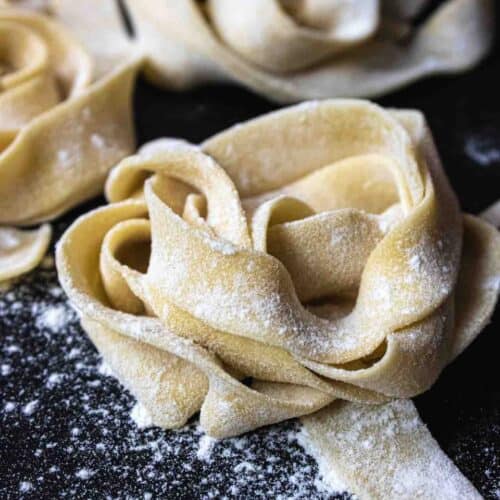
- If you want to make Pappardelle like I did, fold the sheet from each side so that the ends meet in the middle. Now fold it loosely over and over.
- Now use a knife and cut it into stings. Make it as thin or thick as you like. I cut it about 1 inch each.
Then unroll them all and form them into a nest. Put them on a sheet laid out with parchment paper. Let them dry a bit. - If you want to freeze them, put the sheet into the freezer for about 30 minutes and then pack them in a freezer safe container or zip lock bag.
If you want to eat them immediately, go to the next step. - Add water to a large pot and bring it to a boil. Once the water boils add about 1/2 a teaspoon of salt into the water. Now add the pasta and cook it for about 3 minutes or until it reaches the softness you desire.
- Drain the water and rinse pasta with cold water for a couple of seconds.
The pasta is ready! Enjoy with a sauce or just with butter!