

Easy German Spätzle Straight from Grandma’s Kitchen


This post may contain affiliate links. Please see my Disclosure, Privacy and Terms of Use for more information.
This Easy German Spätzle Recipe brings the tender, chewy noodles I grew up with straight to your kitchen. When it comes to comfort food, few dishes can rival the heartwarming simplicity of German Spätzle. This beloved dish, with its tender, chewy texture, has been a staple in German households for generations. Whether served as a side dish or the star of the meal, Spätzle is a versatile delight that brings people together around the table.
Why You’ll Love This Recipe
Homemade Spätzle is one of those recipes that proves you don’t need a long ingredient list to make something delicious. With just four basic ingredients, you can make tender, chewy German noodles right at home.
- Only four ingredients – Flour, eggs, water, and salt are all you need.
- Authentic German recipe – This is the kind of Spätzle I grew up eating in Germany.
- Soft and chewy – Homemade Spätzle has a wonderful texture you simply don’t get from dried noodles.
- Perfect with German meals – Serve it with Schnitzel, Rouladen, Goulash, or anything with plenty of gravy.
- Easy to make ahead – Cook it ahead of time and reheat it when you’re ready to eat.
A Glimpse into History
Spätzle’s origins trace back to the Swabian region of Germany, where it first appeared in the 18th century. The name “Spätzle” is derived from the German word “Spatz,” meaning “little sparrow,” a nod to the dish’s small, irregular shape. Traditionally, Spätzle was made by hand, using simple ingredients like flour, eggs, and milk. It was a dish that could be easily prepared with what was available, making it a favorite among rural communities.
Grandma’s Traditional Method
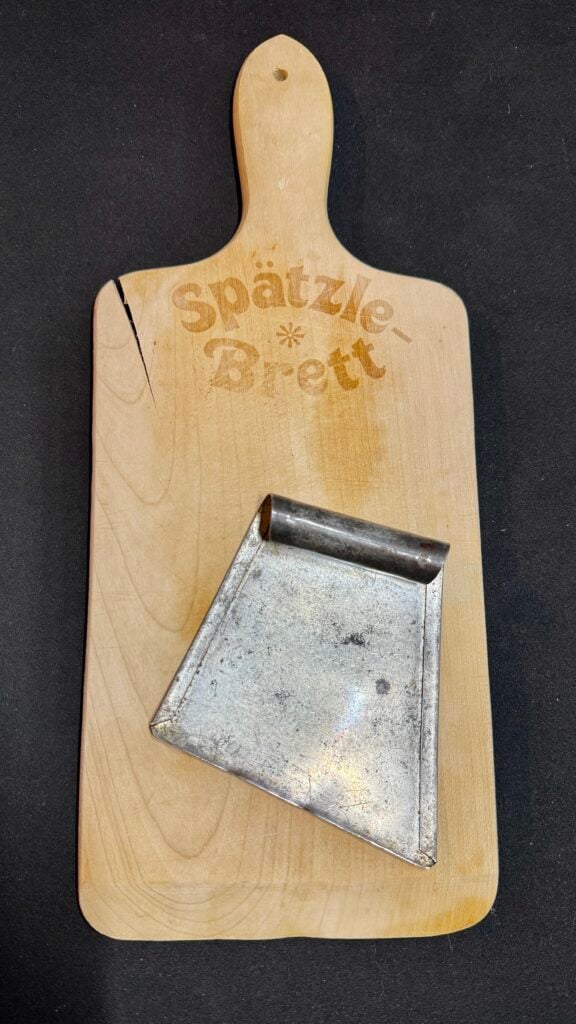
Growing up, I watched my grandma prepare Spätzle with a wooden board and a special knife. She would skillfully scrape
the dough into boiling water, creating delicate strands that cooked to perfection.
This method, though labor-intensive, was a labor of love that infused the dish with a personal touch.
The aroma of freshly cooked Spätzle wafting through the kitchen is a memory I cherish.
Ingredients You’ll Need
One of the best things about homemade Spätzle is how simple the ingredients are. You only need four:
- All-purpose flour – Provides the structure for the Spätzle dough.
- Large eggs – Give the noodles richness, color, and their characteristic texture.
- Water – Adds the moisture needed to create the soft, sticky dough.
- Salt – Seasons the dough and brings out the flavor.
How to Make This Easy German Spätzle Recipe
1. Make the dough
Add the flour and salt to a large bowl. Add the eggs and gradually work in the water, mixing until everything comes together.
The finished dough should be thick and sticky rather than firm like pasta dough.
2. Beat the dough
Continue beating the dough until it becomes smooth and elastic. You should begin to see bubbles forming in the dough. This is a good sign that it’s ready.
3. Bring the water to a boil
Bring a large pot of salted water to a boil, then reduce it slightly so you have a steady simmer while making the Spätzle.
4. Form the Spätzle
For the easier method, fill a Spätzle press with some of the dough and press it directly into the simmering water.
For the traditional method, spread some dough onto a damp Spätzle board and use a scraper or knife to cut thin strips of dough directly into the water.
Work in batches so you don’t overcrowd the pot.
5. Cook until they float
The Spätzle cook quickly. Once they rise to the surface of the water, give them a little more time to finish cooking.
Remove them with a slotted spoon or spider strainer and allow the excess water to drain.
6. Serve or finish in butter
Serve the Spätzle right away, or toss them with a little butter to keep them from sticking together. For even more flavor, you can quickly sauté the cooked Spätzle in butter before serving.
Equipment You’ll Need
You don’t need much special equipment. The tool you use to form the noodles will determine their shape.
- Large mixing bowl – For preparing the dough.
- Wooden spoon – For mixing and beating the dough.
- Large pot – Give the Spätzle plenty of room to cook.
- Slotted spoon or spider strainer – Makes it easy to remove the cooked Spätzle from the water.
- Spätzle press – My easier, modern method for creating long strands of Spätzle. This is the real German one I have. Also this Spätzle Maker works if you want something cheaper.
- OR a traditional Spätzle board and scraper – If you want to make them the old-fashioned way like my grandma did.
💡 Debbie’s Tip
Don’t make the dough too dry. Spätzle dough should be much softer and stickier than regular pasta dough. If you’ve never made it before, you may think something has gone wrong—but that loose, sticky consistency is exactly what allows the dough to pass through a Spätzle press or be scraped from a board.
What to Serve With Spätzle
Spätzle’s mild flavor and tender texture make it especially good with rich sauces and gravy. Some of my favorite ways to serve it include:
Käsespätzle – Think of this as Germany’s wonderfully comforting answer to mac and cheese. Spätzle is layered with melted cheese and topped with crispy fried onions.
Jägerschnitzel – Schnitzel served with a rich mushroom sauce. The Spätzle is perfect for soaking up that sauce.
Rouladen – Thin slices of beef rolled around mustard, bacon, onions, and pickles, then slowly braised. Spätzle makes a wonderful side for all that flavorful gravy.
Goulash – A rich, hearty beef stew is another natural partner for Spätzle.
Spätzle also works beautifully alongside roasts, creamy mushroom dishes, and other meals with plenty of sauce.
Traditional vs. Modern Spätzle Making
My grandma made Spätzle the traditional way with a wooden board and a special knife, scraping small pieces of dough directly into boiling water.
Today, a Spätzle press makes the process much quicker. Simply add the dough to the press and squeeze it directly over the simmering water. You’ll get long, tender strands without having to master the traditional scraping technique.
Both methods work. The press is certainly easier, but there will always be something special to me about watching Spätzle being made the old-fashioned way.
❄️ Storage & Freezing
Refrigerator: Allow leftover Spätzle to cool completely, then store it in an airtight container in the refrigerator for up to 3–4 days.
Freezer: Spätzle also freezes well. Once completely cooled, place it in a freezer-safe container or bag. Freezing it in individual portions makes it easy to take out only what you need.
Reheating: My favorite way to reheat Spätzle is in a skillet with a little butter. Cook just until heated through and lightly golden in spots. You can also reheat it briefly in hot water if you prefer a softer texture.
Frequently Asked Questions
What is Spätzle?
Spätzle is a traditional egg noodle associated especially with Swabian cuisine in southern Germany. Unlike rolled and cut pasta, the soft dough is pressed or scraped directly into simmering water.
What should Spätzle dough look like?
It should be thick, sticky, and elastic. It should not resemble a firm pasta dough. After it has been beaten well, you’ll often see small bubbles developing in the dough.
Do I need a Spätzle maker?
No. A Spätzle press makes the job much easier, but the traditional method uses a wooden board and scraper or knife. There are also Spätzle makers designed to sit over the top of a pot.
Why is my Spätzle dough too thick?
Flour can absorb liquid differently. If the dough seems too stiff to press or scrape easily, add a small amount of water and mix again until you reach the proper sticky consistency.
How do I know when Spätzle is cooked?
The noodles will rise to the surface of the water as they cook. Once they float, let them cook briefly before removing them with a slotted spoon.
Can I make Spätzle ahead of time?
Yes. Cook and drain the Spätzle, allow it to cool, and refrigerate it. When you’re ready to serve, reheating it in a little butter works especially well.
More German Recipes You’ll Love
German Potato Salad
German Beef Rouladen
German Pretzel
A Taste of Home
Spätzle has been part of my life for as long as I can remember. I can still picture my grandma standing in the kitchen with her wooden board, scraping the dough into the pot one little piece at a time. And super fast!
Today I may reach for a Spätzle press because it’s faster, but the food itself still takes me right back to those memories.
That’s one of the things I love most about these old German recipes. They’re made with simple ingredients, but they carry generations of memories with them. And now I get to share this one with you.
Enjoy every bite,

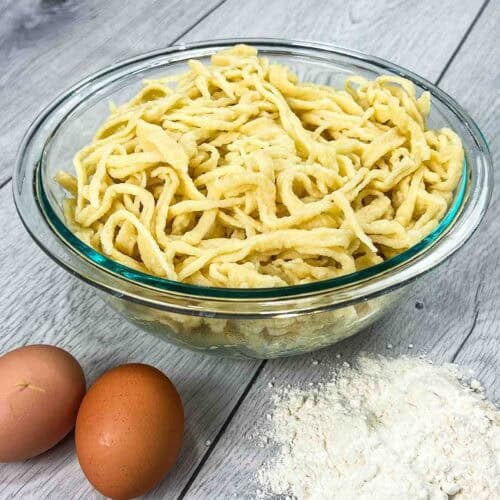
Easy German Spätzle Straight from Grandma’s Kitchen
Ingredients
- 375 gram all-purpose flour
- 3 large eggs
- 1 teaspoon salt
- 200 ml water
Instructions
- Add flour, salt, eggs and water to a large bowl.
- Using a sturdy wooden spoon or spatula, mix the eggs and water into the flour. Start in the center and gradually work the flour into the batter. This will take some arm strength, but you can do it!
- Continue beating the dough until it is smooth and elastic. When the dough is ready, you should see small bubbles or blisters forming as you mix.
- Set the bowl aside. Bring a large pot of salted water to a boil.
- Get your Spätzle press or Spätzle board ready. If using a press, fill it with batter and slowly press the dough directly into the boiling water. You will see the dough come through the holes in small strands.
- Continue pressing until the batch is in the water. Cook until the Spätzle float to the surface, then cook for about 1 additional minute. Remove them with a mesh strainer or slotted spoon.
- Transfer the cooked Spätzle to a strainer and rinse briefly under cold water to help prevent them from sticking together.
- Keep them warm and repeat the process until all the batter is transformed into Spätzle. Enjoy!

This may be a silly question, but can you use / make the Spatzle in a soup – sort of like a dumpling? Or would it be best to cook it first then add to the soup?
Yes you can, but I would make them in a separate pot of boiling water and then use them in the soup. But yes you can, just be careful that you don’t have to much of the Spätzle!