German Frikadellen — The Real Story Behind Germany’s Beloved Meat Patty

Servings: 6 Total Time: 25 mins Difficulty: Beginner Dairy Free Nut Free
Let's get one thing straight: Frikadellen are not hamburgers, and not meatballs either. If anything, it's the other way around.
German Frikadellen hot off the stove pinit

Authentic German Frikadellen — juicy, golden pan-fried meat patties made with oats, a family secret passed down from Grandma’s kitchen.

Some Things You Never Forget

I have never once questioned my grandmother’s Frikadellen — not the ingredients, not the method, not the way she stood at her stove mixing everything with her bare hands like she’d done a thousand times before, because she had.

Oma made Fleischküchle. That’s what we called them in Swabia, where we’re from — not Frikadellen, not Buletten. And she always used oats, never breadcrumbs or soaked bread. I asked her why more than once. She’d just look at me the way grandmothers look at grandchildren who ask too many questions, and say this was how it was done.

My mother made them the same way. And now, so do I.
Why You’ll Love These Frikadellen

If you’ve never made Frikadellen before, here’s why this recipe deserves a permanent spot in your rotation:

  • Incredibly juicy and tender thanks to oats in the mixture — a family secret worth stealing
  • Simple pantry ingredients that come together in under 30 minutes
  • Equally delicious hot from the pan or cold the next day — maybe even better cold
  • Endlessly versatile — dinner, lunchbox, or sliced into a crusty roll
  • A genuine taste of German home cooking you won’t find in any restaurant here

What Are Frikadellen?

Frikadellen are traditional German meat patties, similar to meatballs but larger and flattened – ground meat (usually pork and beef) combined with oats or breadcrumbs, onion, and egg, pan-fried until golden and crispy outside while staying soft and juicy within. They’re never grilled, and they’re just as good cold as hot, which Americans often find surprising. In Germany, cold Frikadellen in a crusty roll with mustard is a completely normal lunch.

What’s in a Name?

Almost every region of Germany has its own name for this dish:

  • Frikadellen — the most widely used term, common in northern and central Germany
  • Buletten — the Berlin name, often served cold in pubs with pickled eggs and a cold beer
  • Fleischpflanzerl — the Bavarian version, made with soaked bread and seasoned with marjoram
  • Fleischküchle — the Swabian name my grandmother used, flatter and more rustic
  • Bratklops — another regional name found in parts of central Germany

Same dish. Different name. Different family. Different memory. That’s Germany for you.

Did You Know?
The Frikadelle and the Hamburger

Germans had been eating Frikadellen for centuries before the hamburger existed – records of the word “Frikadelle” date back to the late 1600s, borrowed from the French fricandeau. During the 1800s, hundreds of thousands of German immigrants passed through the port of Hamburg on their way to the U.S., bringing their Frikadellen with them. By the 1870s and 1880s, New York restaurants were serving “Hamburg Steak” – essentially a German Frikadelle adapted for American tastes. Someone eventually put that steak between two slices of bread, and food historians still argue over who did it first.

Even the name gives it away – “Hamburger” simply means “from Hamburg,” the same way a Frankfurter is from Frankfurt. Many food historians believe the American hamburger evolved directly from the German Frikadelle, which makes the Frikadelle not a version of the hamburger, but its ancestor. I find that enormously satisfying.

Ingredients & Substitutions

Ground beef and pork (2:1 ratio): Beef gives structure and heartiness; pork adds fat and juiciness. The combination beats all-beef alone.

Oats: The family secret. They absorb moisture as the patties cook, keeping them tender without making them heavy — a softer texture than breadcrumbs give you.

Fresh parsley: Bright and essential — skip the dried if you can.

Egg: Binds everything and helps the patties hold their shape.

Breadcrumbs (optional): Only if your mixture feels too wet to shape — a few tablespoons will firm it up.

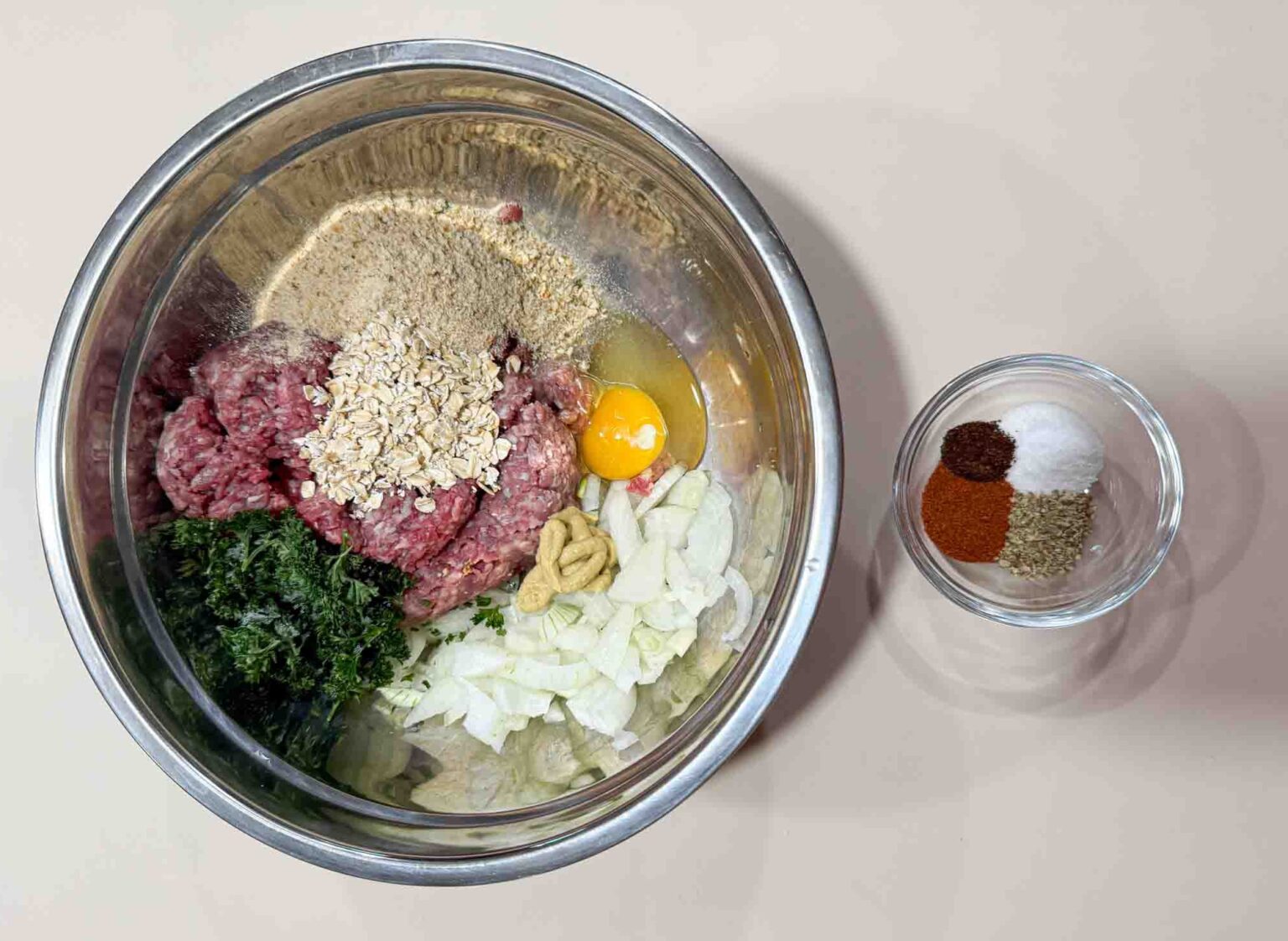
Ingredients for German Frikadellen

How to Make Frikadellen

1. Mix. Combine ground beef, pork, finely chopped onion, parsley, oats, egg, paprika, salt, and pepper in a large bowl. Mix thoroughly with your hands until uniform — Oma always did, and she was right about everything.

2. Shape. Wet your hands with cold water and form the mixture into patties slightly larger and flatter than you think — they shrink as they cook.
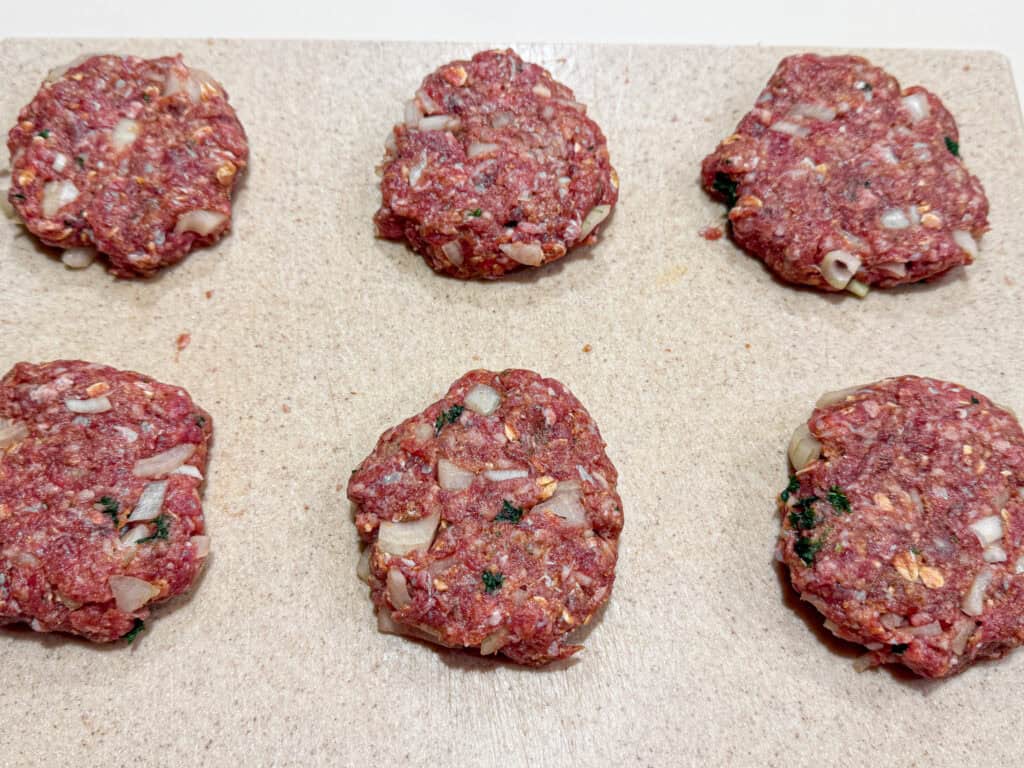
how to form a frikadelle

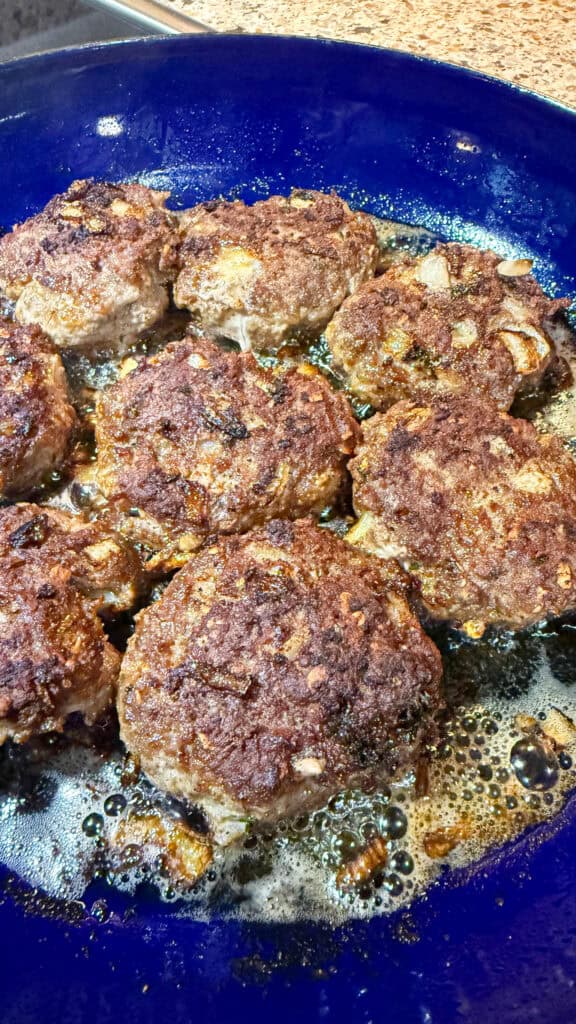
3. Fry. Heat oil or butter in a large skillet over medium heat. Cook the patties undisturbed 4–5 minutes per side until deeply golden and cooked through.
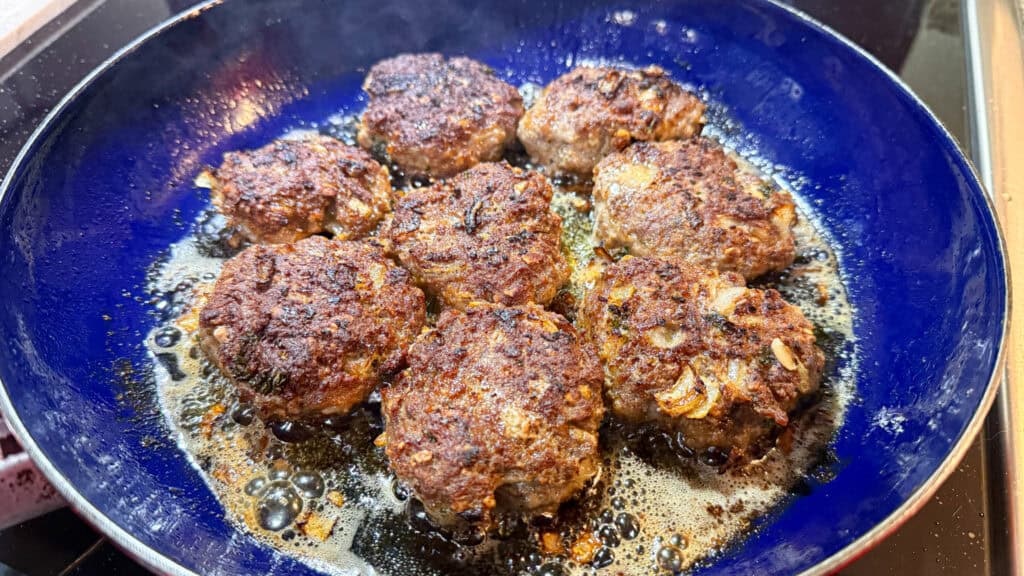
finished fried frikadellen in pan

4. Serve. Enjoy immediately, or let them cool and eat them cold — both are correct.

Debbie’s Kitchen Tips

  • Mix with your hands, and keep them cold. Rinse under cold water first — it’s genuinely the best tool for this job.
  • Wet your hands before shaping so the mixture doesn’t stick.
  • Don’t flip too soon. If they’re sticking, the crust isn’t ready — they’ll release on their own when it is.
  • Season generously. Oats and egg absorb some of the seasoning, so don’t be timid with salt and pepper.
  • If they’re falling apart, add another egg or a spoonful of breadcrumbs next time and mix a bit more thoroughly.
  • Try one cold from the fridge the next morning. It’s one of life’s quiet pleasures.

A Few Regional Variations

  • The Berlin Bulette: swap the parsley for caraway seeds and a teaspoon of mustard; serve cold with a hard roll.
  • The Bavarian Fleischpflanzerl: swap the oats for a milk-soaked bread roll, plus a pinch of marjoram and nutmeg.
  • Mini Frikadellen: shape smaller for a party platter with toothpicks and mustard for dipping.

Storage & Reheating

Refrigerate cooled Frikadellen in an airtight container for up to 4 days — they’re excellent cold, no reheating required. To reheat, warm in a skillet over medium-low heat to bring back the crust (the microwave works but skips the crispy exterior). Freeze fully cooled patties in a single layer, then bag them, for up to 3 months. The raw mixture can also be made up to 24 hours ahead — the flavor actually deepens overnight.

Frequently Asked Questions

Are Frikadellen the same as hamburgers? Not even close — and the Frikadelle came first. They’re pan-fried, seasoned throughout, and eaten with or without a bun, hot or cold.

Why oats instead of breadcrumbs? My grandmother used oats, my mother used oats, so I use oats — they absorb moisture beautifully and keep the patties tender without weighing them down.

Can I use only beef instead of beef and pork? Yes, though the pork adds fat and juiciness that’s hard to replicate with beef alone. All-beef will be leaner and slightly firmer.

Can I eat them cold? Not only can you — you should. Cold Frikadellen are a beloved German tradition, packed in lunchboxes and eaten straight from the fridge.

How We Serve Frikadellen

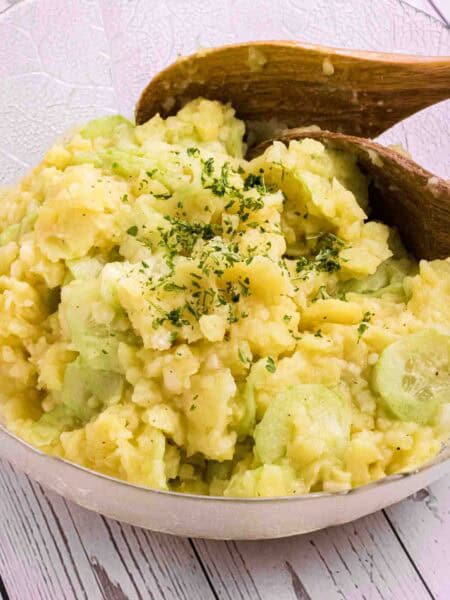
My favorite is the classic: German potato salad, the Swabian style with vinegar and broth, exactly as Oma served them. They’re also wonderful cold in a crusty roll with mustard and pickles, or alongside a simple green salad for a lighter dinner.

German Frikadellen — The Real Story Behind Germany’s Beloved Meat Patty

Difficulty: Beginner Prep Time 15 mins Cook Time 10 mins Total Time 25 mins
Servings: 6 Estimated Cost: $ 6

Description

These authentic German Frikadellen are tender, golden pan-fried meat patties made with a beef and pork blend, fresh parsley, onion, and oats — a family secret ingredient that keeps them incredibly juicy.

Ingredients

Cooking Mode Disabled

Instructions

  1. Combine ground beef, ground pork, onion, parsley, oats, egg, paprika, salt, and pepper in a large mixing bowl. Mix thoroughly with your hands until uniform.
  2. If the mixture feels too wet to shape, add breadcrumbs a tablespoon at a time until it holds together.
  3. Wet your hands with cold water and shape the mixture into patties, slightly larger and flatter than desired — they shrink during cooking.
  4. Heat oil or butter in a large skillet over medium heat. Add the patties and cook undisturbed 4–5 minutes until a deep golden crust forms.
  5. Flip and cook another 4–5 minutes until cooked through and golden on both sides.
  6. Serve warm, or cool and enjoy cold.

Note

Cast iron gives the best crust, but any heavy skillet works well.

Keywords: German Frikadellen, Frikadellen recipe, authentic German Frikadellen, German meat patties, Fleischküchle, Buletten, German comfort food, homemade Frikadellen
Rate this recipe
Did you make this recipe?

Tag @debbieskitchencorner on Instagram and hashtag it #debbieskitchencornerrecipes so we can see all your recipes.

Pin this recipe and share it with your followers

pinit
Recipe Card powered by WP Delicious
Debbie Hauck - the face behind Debbies Kitchen Corner
Debbie Hauck Video and Food Content Creator

Hi, I am Debbie, a full-time YouTuber and Food Content Creator. I live in the Monmouth Oregon  with my family. Love traveling, sharing new recipes and hanging out with my kids.

Rate this recipe

Your email address will not be published. Required fields are marked *

Rate this recipe


Add a question

Your email address will not be published. Required fields are marked *


Min
Share it on your social network