
Dampfnudeln (German Steamed Yeast Dumplings)

This post may contain affiliate links. Please see my Disclosure, Privacy and Terms of Use for more information.
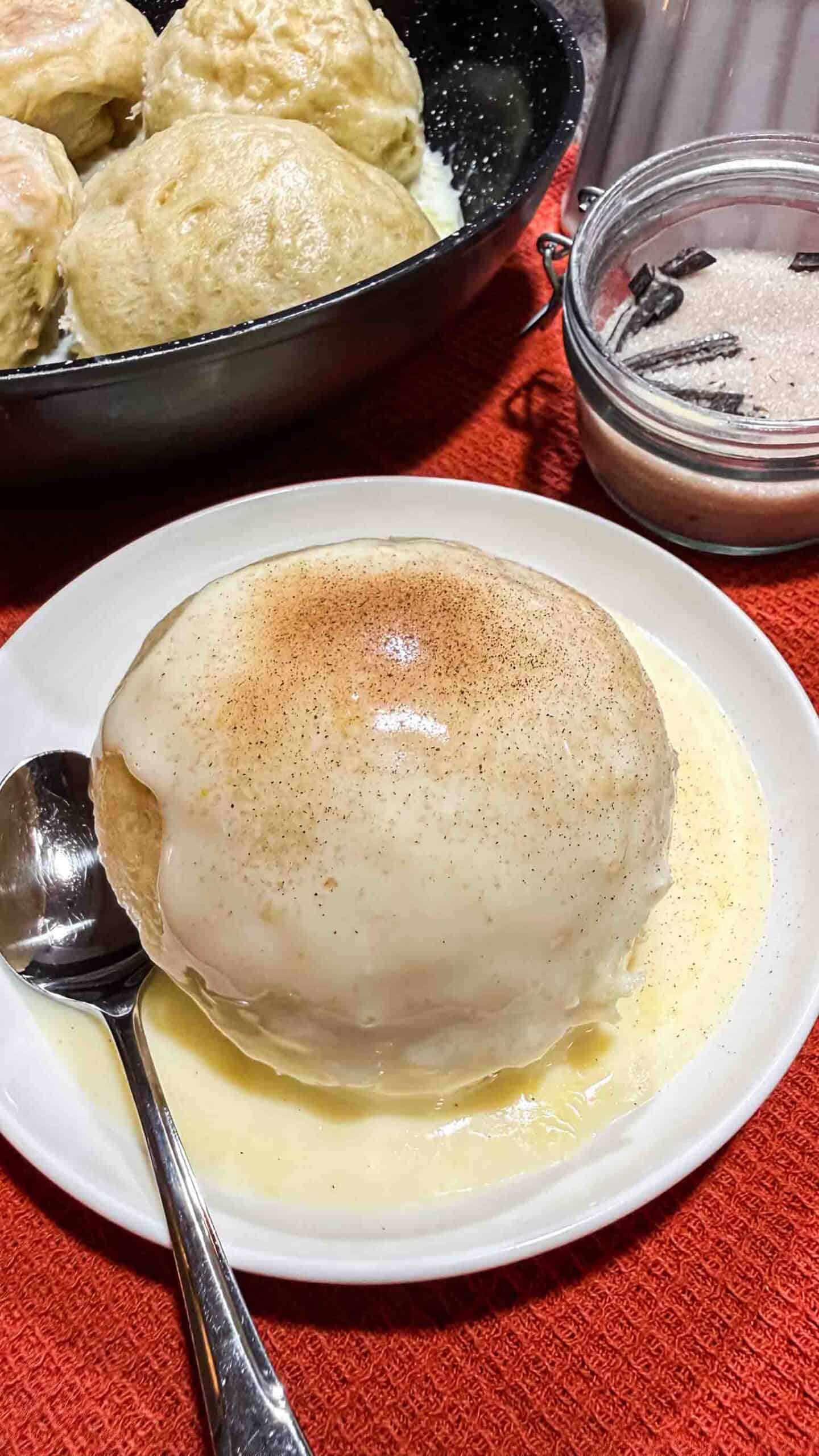
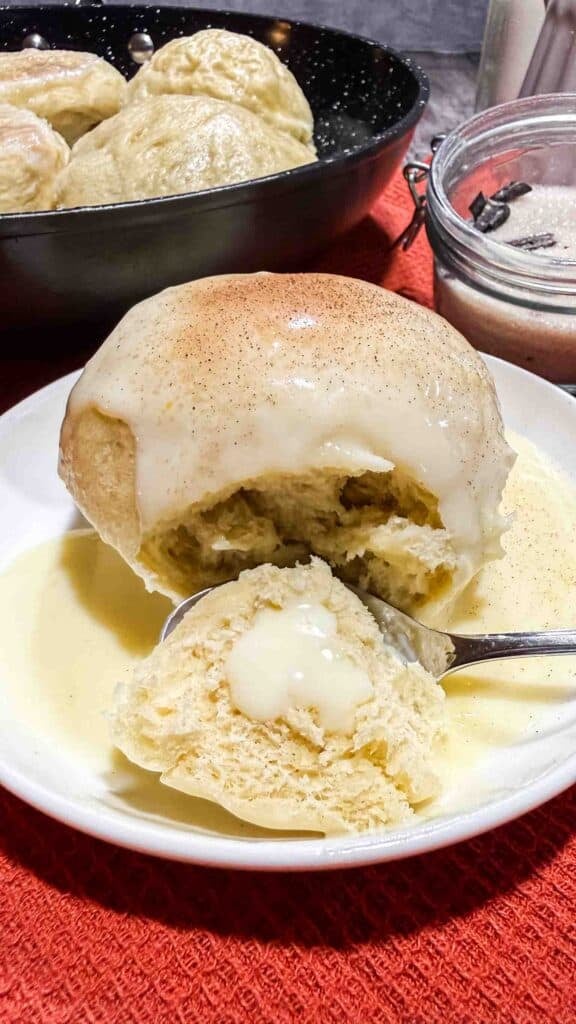
Imagine a big, fluffy yeast dumpling, soft and pillowy on top, with a golden, caramelized, slightly crunchy bottom. That’s a Dampfnudel. They’re gently steamed in a covered pan with milk, butter, sugar, and vanilla until the liquid cooks away and the bottoms turn into sweet, buttery caramel. The crispy bottom is everyone’s favorite part!
Here’s something that surprises many Americans: in southern Germany, Dampfnudeln aren’t just dessert. They’re often served as a sweet main meal for lunch or dinner, usually with a big pour of warm vanilla sauce. Dessert for dinner? In Germany, absolutely!
Why You’ll Love This Recipe
Dampfnudeln are pure German comfort food. Here’s why you’ll want to make them:
- Soft and fluffy inside. Like the lightest, softest dinner roll you’ve ever had.
- That caramelized bottom! Sweet, buttery, and a little crunchy.
- Simple ingredients. Flour, butter, eggs, milk, sugar, and yeast. That’s it.
- No oven needed. They cook right on your stovetop in one pan.
- A true German classic. Made the old-fashioned way, just like Oma taught me.
Lessons From Oma’s Kitchen
At least once a week, on the days I had afternoon school, I went to my Oma’s house afterward. And almost every time, I asked for the same thing: Dampfnudeln. Again and again, and she never said no.
When I got older, she finally taught me how to make them myself. I can still close my eyes and see her hands gently shaping each ball of dough, then setting them one by one into the pan with butter, sugar, and vanilla sugar. Her most important rule? Never lift the lid until you can smell that they’re ready. It takes about 25 minutes, but she never needed a timer. She just knew that smell. Over the years, I learned it too, and now I never need a timer either.
Dampfnudeln were also my daughter-in-law’s favorite. She would drop everything the moment she knew they were on the stove. I still think of her every time I make them. That’s the thing about food — it keeps the people we love close, no matter where life takes them.

What Are Dampfnudeln?
Dampfnudeln (one is called a Dampfnudel) are soft yeast dumplings from southern Germany. The name means “steam noodle,” which sounds funny for a dumpling. But long ago, the word “Nudel” was also used for dumplings.
Here’s the clever part: they cook in a covered pan with a little bit of liquid. First, the steam makes them rise and turn fluffy. Then, once the liquid is gone, the bottoms sizzle in the butter and sugar and turn golden and caramelized.
Nobody knows for sure exactly where Dampfnudeln were first made, but they’re loved all across southern Germany. In my home region of Swabia, they’re incredibly popular, and so many of us grew up with them at our Oma’s table. Bavaria and the Palatinate (Pfalz) both proudly claim them too. In the Palatinate, they’re often cooked in salted water and served with savory dishes like potato soup or with wine sauce. In Swabia and Bavaria, they’re cooked in milk, butter, and sugar and served sweet, just like this recipe.
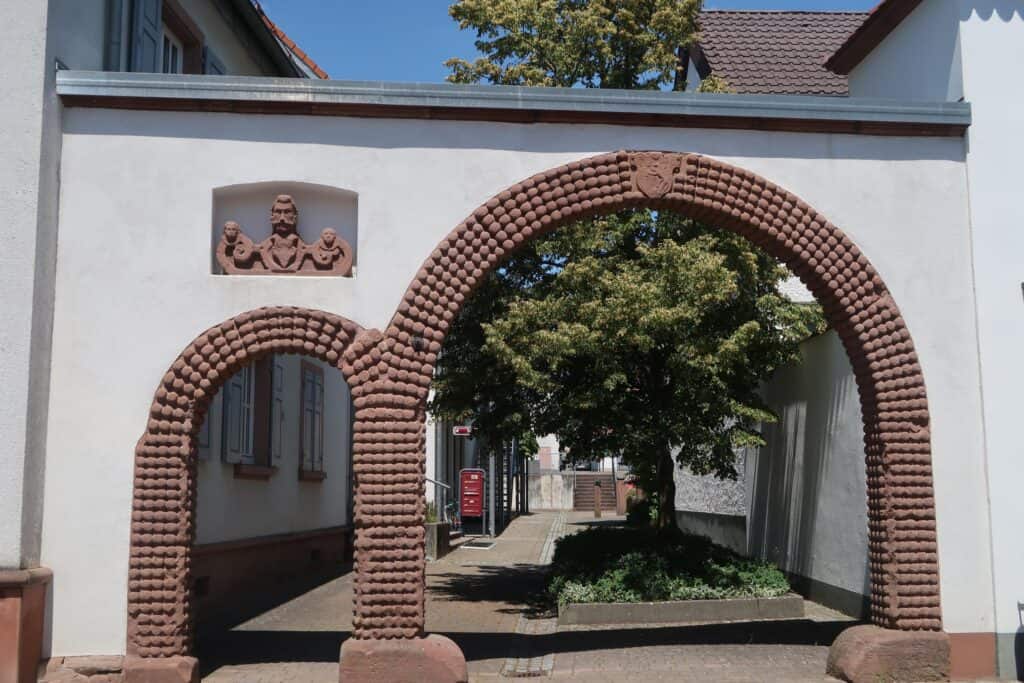
There’s even a famous legend about them. During the Thirty Years’ War, Swedish soldiers came to the little village of Freckenfeld in the Palatinate and demanded money. The village baker, Johannes Muck, saved the day by baking Dampfnudeln until every soldier was full, 1,286 of them! The soldiers left the village in peace. Today, Freckenfeld has a gate decorated with stone Dampfnudeln, called the Dampfnudeltor, and it’s even on the town’s coat of arms.
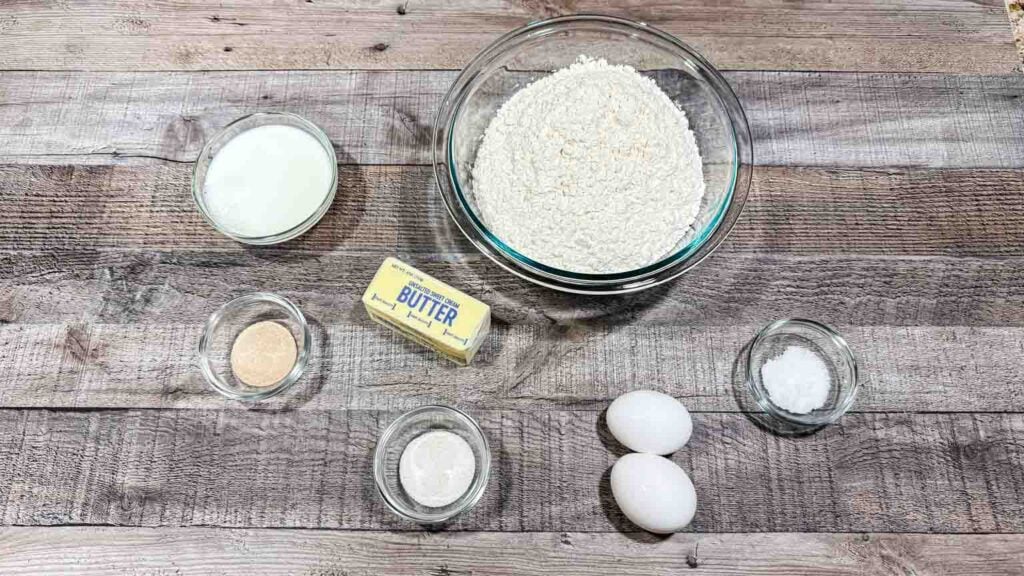
Ingredients You Need
These are simple, everyday ingredients, but each one plays an important role. Here’s what you’ll need.
For the dough:
- All-purpose flour: Gives the dumplings their soft, fluffy structure.
- Butter: Melted and cooled, for a rich, tender dough.
- Eggs: Make the dough soft and golden. Use room temperature eggs.
- Milk: Lukewarm milk wakes up the yeast. Start with the smaller amount and add more only if the dough feels dry.
- Dry yeast: Makes the dough rise. If you can find fresh yeast, use 20g instead.
- Sugar: Just a little, to feed the yeast and add a hint of sweetness.
- Salt: Balances the flavor.
For the pan:
- Milk: Creates the steam that cooks the dumplings.
- Butter and sugar: Melt together and turn into that golden caramel on the bottom.
- Vanilla sugar: A classic German baking ingredient that adds a lovely vanilla flavor. Look for it in German stores, international aisles, or online. You can also use 1 teaspoon of vanilla extract.
- Salt: Just a pinch to balance the sweetness.
Equipment You Need
The most important tool for Dampfnudeln is the right pan. Here’s what you’ll need:
- Large, heavy pot or deep skillet with a tight-fitting lid: The lid must close tightly to hold in the steam. A glass lid is wonderful because you can peek without lifting it!
- Stand mixer with dough hook: Makes kneading easy. You can also knead by hand.
- Large bowl: For letting the dough rise.
- Spatula: For lifting the finished Dampfnudeln out of the pan.
How to Make Dampfnudeln
This recipe takes some patience while the dough rises, but the steps themselves are simple. Just follow along.
1: Wake up the yeast. Warm 125 ml (½ cup) of the milk until it’s lukewarm, about as warm as a baby’s bath. Stir in the yeast and sugar and let it sit for about 5 minutes, until it looks a little foamy.
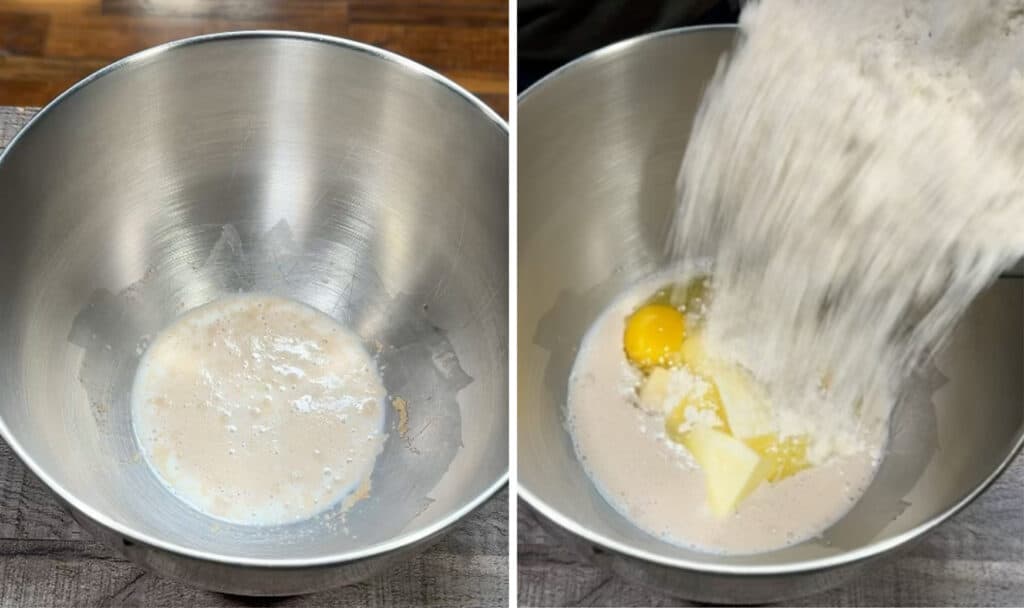
2: Mix the dough. Add the flour and salt to your stand mixer bowl. Add the melted butter, eggs, and yeast milk. Mix with the dough hook on low.
3: Adjust the milk. If the dough looks dry or crumbly, add more lukewarm milk, a splash at a time, up to 250 ml (1 cup) total. You want a soft dough that isn’t sticky.
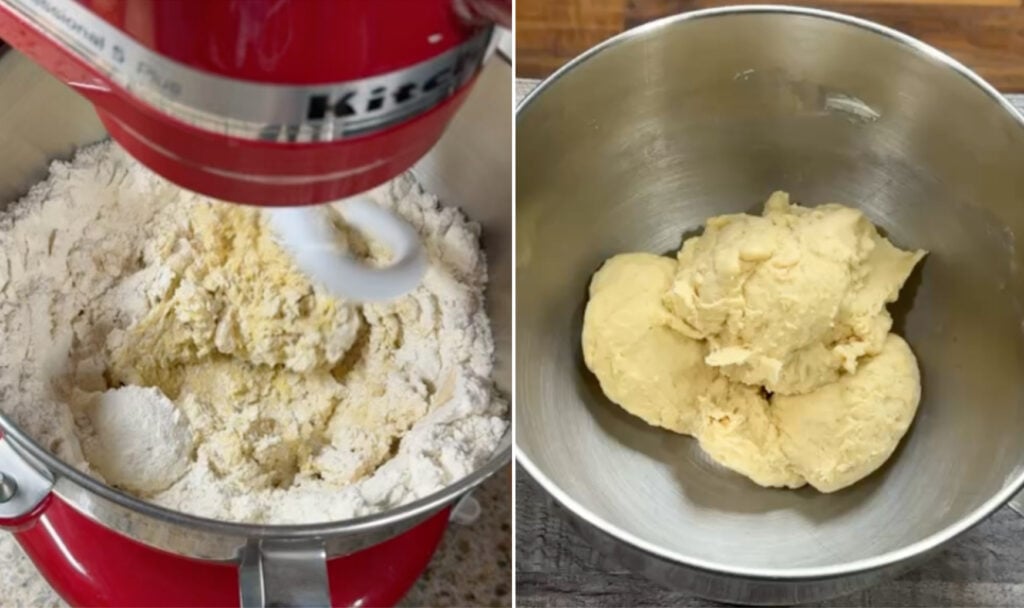
4: Knead. Knead for 6 to 8 minutes, until the dough is smooth, stretchy, and pulls away from the sides of the bowl.
5: First rise. Cover the bowl with a kitchen towel and let the dough rise in a warm spot for about 1 hour, until it’s doubled in size.
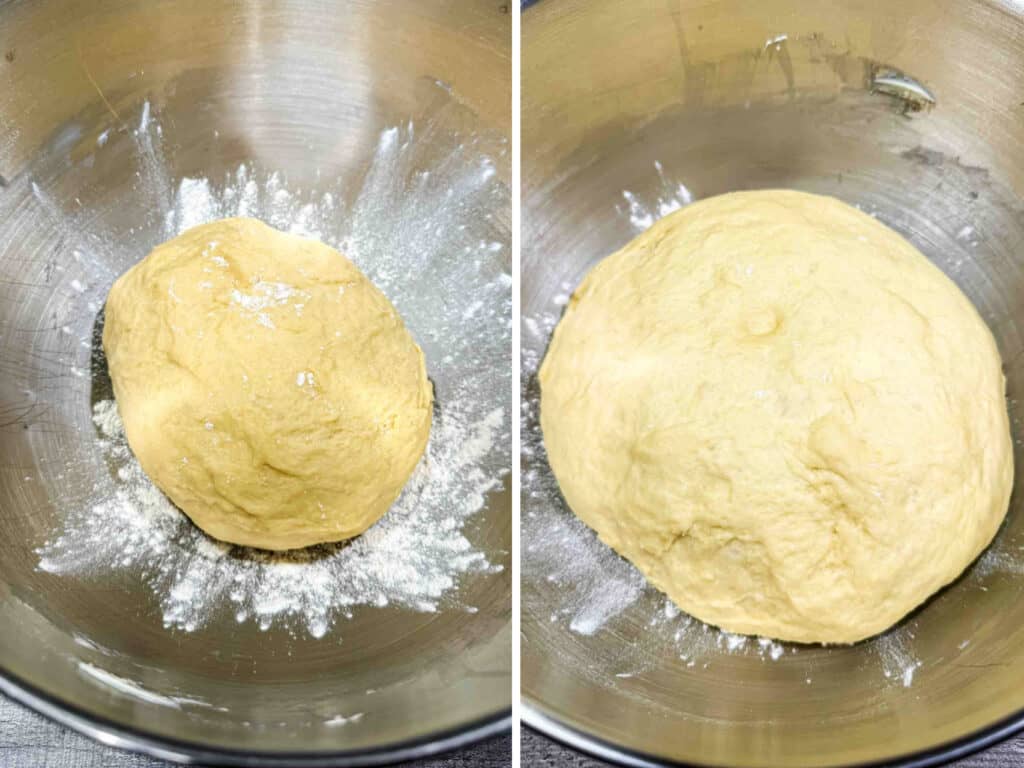
6: Shape the dumplings. Turn the dough out onto a lightly floured counter and knead it briefly. Divide it into 10 to 12 equal pieces. Gently shape each piece into a smooth ball by tucking the edges underneath, just like Oma did with her hands.
7: Second rise. Place the balls on a floured board or counter, leaving space between them. Cover with a towel and let them rise again for 20 to 30 minutes, until puffy.
8: Prepare the pan. The dumplings need room to grow, so they won’t all fit in one pan. Use two pans at the same time, or cook them in two batches. For each pan or batch, add the milk, butter, sugar, vanilla sugar, and salt. Heat over medium until the butter melts and the milk just begins to simmer.
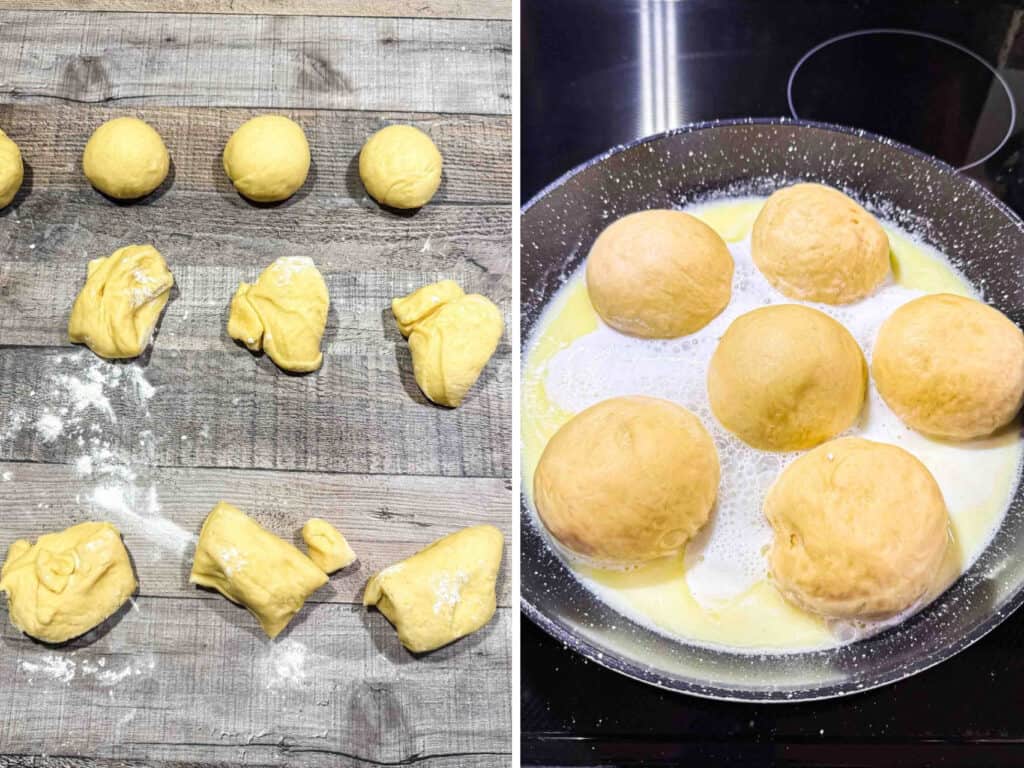
9: Add the dumplings. Carefully set half of the dough balls into the pan, smooth side up. Place them close together, but leave a little room, because they’ll grow. If you’re cooking in two batches, keep the rest of the dough balls covered with a towel while the first batch cooks.
10: Cover and steam. Put the lid on tightly and turn the heat down to low. Let them cook for about 25 minutes. Do not lift the lid!
11: Listen and smell. Near the end, you’ll hear a gentle crackling sound as the liquid cooks away and the bottoms start to caramelize. You’ll also smell sweet, buttery caramel. That’s how you know they’re ready.
12: Serve right away. Take off the lid, lift the Dampfnudeln out with a spatula, and serve them warm with the caramelized bottoms facing up.
13: Cook the second batch. If you’re cooking in batches, wipe out the pan, add a fresh batch of the milk mixture, and cook the remaining dumplings the same way.
Debbie’s Tip
Trust your nose, not your eyes. My Oma always said to never lift the lid until you can smell that they’re ready. When the milk is gone and the butter and sugar begin to caramelize, your whole kitchen fills with a sweet, toasty smell. That’s your signal. If you’re nervous the first time, use a pot with a glass lid so you can watch without letting the steam out.
Variations & Substitutions
Dampfnudeln are wonderful just as they are, but here are a few traditional ways to serve and change them:
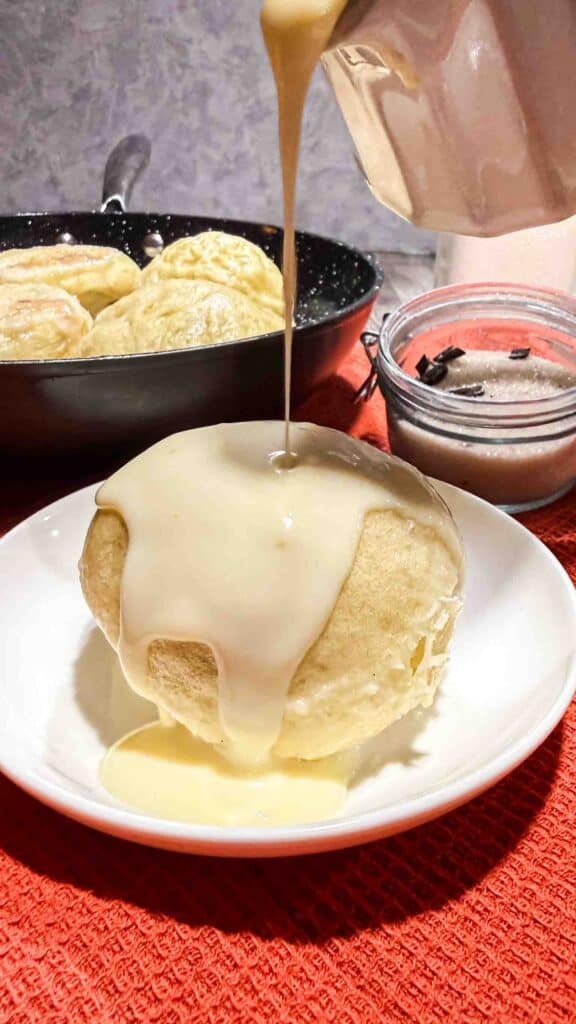
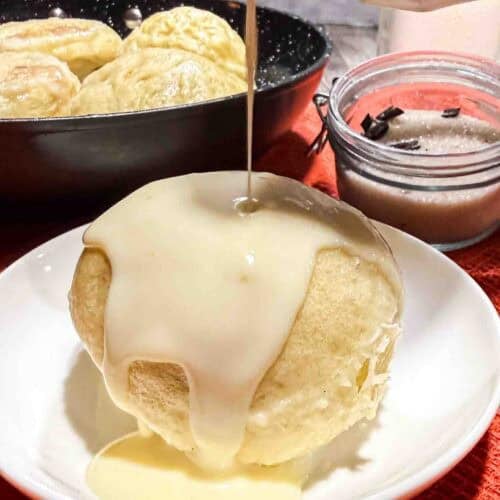
- With vanilla sauce: The most classic way! Pour warm German vanilla sauce (Vanillesoße) over the top.
- With fruit: Serve with stewed plums, cherries, or warm applesauce.
- Savory Palatinate style: Cook them in salted water instead of the milk mixture and serve with potato soup.
- With browned butter: Drizzle a little browned butter over the top before serving.
- No vanilla sugar? Use 1 teaspoon of vanilla extract instead.
Storage & Freezing
Dampfnudeln are best eaten fresh and warm, right out of the pan. But leftovers keep well too.
- Fridge: Store in an airtight container for up to 2 days.
- Reheat: Warm them in a covered pan with a splash of milk over low heat, or in the microwave, covered, for 30 to 60 seconds.
- Freeze: Let them cool completely, then freeze in a freezer bag for up to 3 months. Thaw in the fridge overnight and reheat.
Important
Never lift the lid while they’re cooking. When you lift the lid, the steam escapes and cool air rushes in. That can make your beautiful, fluffy Dampfnudeln collapse and turn dense. Keep that lid closed until you smell the caramel.
Frequently Asked Questions
Here are the questions I hear most about Dampfnudeln.
What’s the difference between Dampfnudeln and Germknödel?
Germknödel are an Austrian cousin. They’re usually filled with plum jam and cooked in boiling salted water or steam, then topped with poppy seeds and powdered sugar. Dampfnudeln aren’t filled and get that caramelized bottom from the pan.
Why did my Dampfnudeln collapse?
Most likely, the lid was lifted too early, or the lid didn’t fit tightly. Keep the lid closed and the heat low.
Can I bake them in the oven instead?
Yes! My old German cookbook does it that way. Bring the milk mixture to a simmer in an oven-safe pot, add the dumplings, cover tightly with a lid, and bake at 425°F (220°C) for about 30 minutes.
Are Dampfnudeln a dessert or a meal?
Both! In southern Germany, they’re often served as a sweet main meal, especially with vanilla sauce. Here at home, they also make a cozy dessert.
More Recipes You’ll Love
If you love traditional German cooking and baking, try these next:
From My Kitchen to Yours
Some recipes are more than food. They’re memories you can taste. Every time I make Dampfnudeln, I’m right back in my Oma’s kitchen, waiting for that sweet smell to tell us they were ready. I hope this recipe brings that same warmth into your home. Make a batch, pour on some vanilla sauce, and share them with the people you love.
If you make them, I’d love to see them! Tag me on Instagram or pin them to your German recipes board on Pinterest.
Enjoy every bite,

Dampfnudeln (German Steamed Yeast Dumplings)
Ingredients
Dough
- 500 g all-purpose flour about 4 cups
- 100 g butter melted and cooled (7 tablespoons)
- 2 large eggs room temperature
- 125 to 250 ml lukewarm milk ½ to 1 cup
- 10 g dry yeast about 1 tablespoon
- 1 tablespoon sugar
- 5 g salt about 1 teaspoon
For the Pan
- 1 cup milk 240 ml
- 50 g butter 3½ tablespoons
- 1 tablespoon sugar
- 1 packet vanilla sugar or 1 teaspoon vanilla extract
- 1 pinch salt
Instructions
- Activate yeast: Stir the yeast and sugar into 125 ml lukewarm milk. Let sit 5 minutes until foamy.
- Mix: Add the flour and salt to a stand mixer bowl. Add the melted butter, eggs, and yeast milk. Mix on low with the dough hook, adding more milk as needed for a soft dough.
- Knead: Knead 6 to 8 minutes until smooth and the dough pulls away from the bowl.
- First rise: Cover and let rise in a warm spot for about 1 hour, until doubled.
- Shape: Knead briefly, divide into 10 to 12 pieces, and shape into smooth balls.
- Second rise: Cover and let rise 20 to 30 minutes, until puffy.
- Prepare the pan: The dumplings won’t fit in one pan, so use two pans or cook in two batches. For each, heat the milk, butter, sugar, vanilla sugar, and salt in a pot with a tight-fitting lid until the butter melts and the milk begins to simmer.
- Add dumplings: Place half the dough balls in each pan (or the first half for batch one), leaving a little room between them. Keep the remaining dough balls covered.
- Steam: Cover tightly, reduce heat to low, and cook about 25 minutes. Do not lift the lid.
- Check: When you hear crackling and smell caramel, the liquid is gone and the bottoms are golden.
- Serve: Remove from the pan and serve warm, caramelized side up, with vanilla sauce if desired.
Notes
- Never lift the lid while cooking, or the dumplings may collapse.
- Fresh yeast option: use 20g fresh yeast instead of dry yeast.
- Oven method: cover tightly and bake at 425°F (220°C) for about 30 minutes.
- Best served fresh and warm.
- Cooking in batches? Wipe out the pan and make a fresh milk mixture for the second batch.