
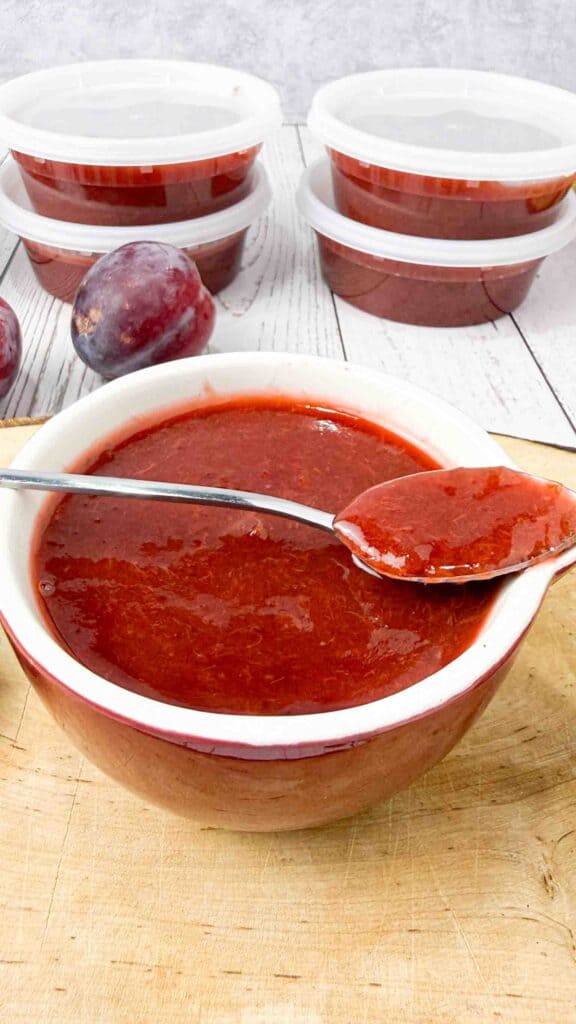
This easy plum jam recipe uses Zwetschgen — what we call Italian plums in Germany, technically a type of prune plum — simmered down with sugar until thick and glossy, then frozen in individual containers instead of canned.
No pectin, no fuss, and it tastes like late summer every time you open one.
I've completely switched over to freezer jam, and I don't think I'm going back. Canned jam always tasted a little muted to me — like something got lost between the pot and the jar. Freezer jam tastes so much more like fruit straight off the tree. It also lets me use less sugar than a canning recipe requires, so what you're actually tasting is the fruit, not a shelf of sugar-preserved jars lined up in the pantry.
Zwetschgen are a variety of small, oval, deep-purple plums common throughout Germany and much of Europe — in the U.S., you'll usually find them labeled as Italian plums or prune plums. They're denser and less juicy than round American plums, which makes them especially good for jam: less water to cook off, and a rich, slightly tart flavor once sweetened.
Zwetschgen (Italian plums): fresh, ripe Zwetschgen, washed and pitted - no need to chop, they break down on their own as they cook.
Sugar: This is on the lower side compared to many plum jam recipes, which lets the natural tartness of the Zwetschgen come through.
Lemon juice: Brightens the flavor and helps the jam set.
1. Prep and macerate. Wash the Zwetschgen and remove the pits — no need to chop them, they break down on their own as they cook. Combine the plums with the sugar in a large bowl or pot, stir to coat, and let sit for about 2hours at room temperature. This draws out the natural juices and gives the jam a better texture before it ever hits the stove.
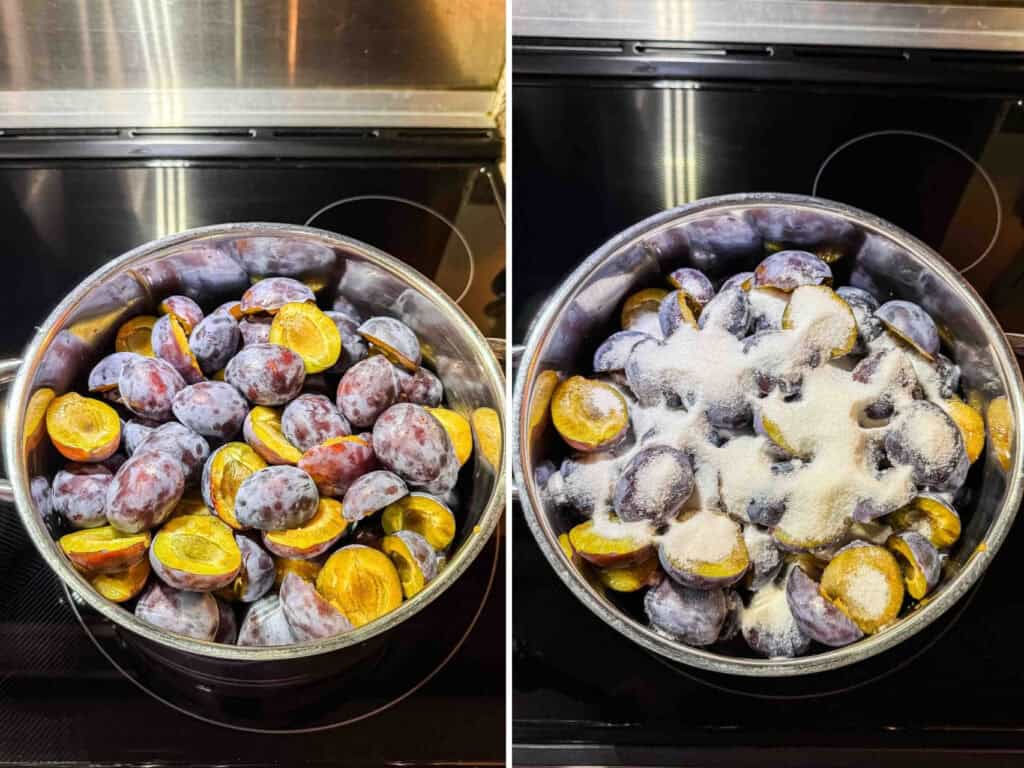
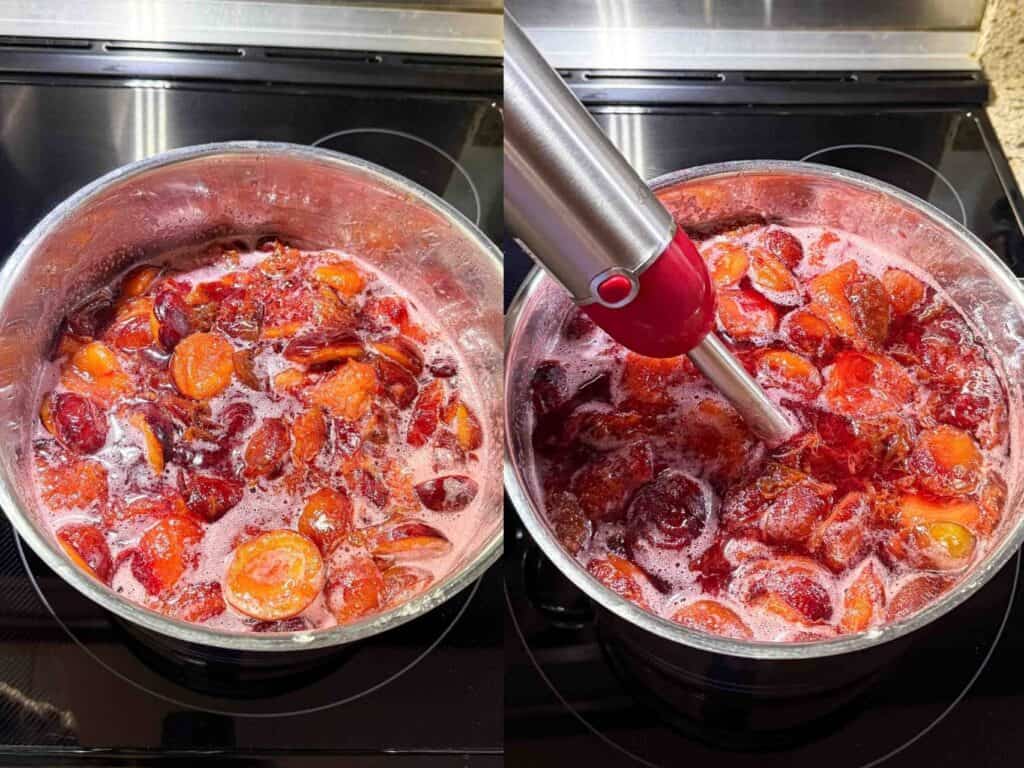
2. Simmer. Transfer the macerated plums to a large pot, stir in the lemon juice, and bring to a boil. Reduce to a simmer and cook for about 20 minutes, stirring occasionally.
3. Blend partway through. Around the 10-minute mark, use an immersion blender to blend the jam right in the pot for a few seconds. This breaks down the plums further and helps the jam thicken noticeably better than simmering alone. Continue simmering until the 20 minutes are up.
4. Cool in the pot. Remove from heat and let the jam cool completely in the pot before transferring it — this helps it finish thickening and makes it much easier to portion.
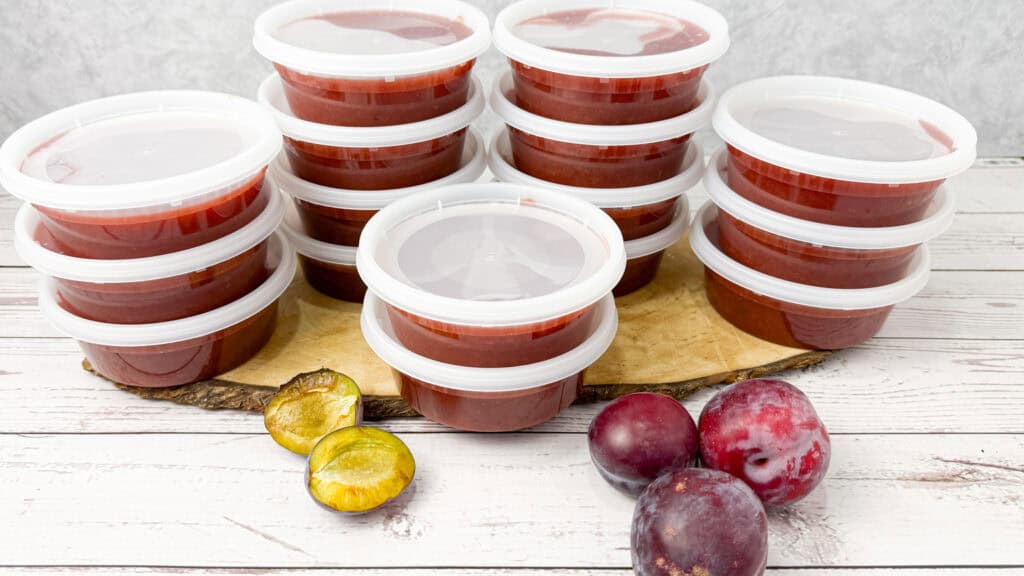
5. Portion and freeze. Once cooled, ladle the jam into freezer-safe containers, leaving a little headspace for expansion. Label each container, then freeze.
• Don't bother chopping the plums. They break down completely on their own during the simmer — one less step.
• Use an immersion blender around the 10-minute mark. A quick blend right in the pot thickens the jam noticeably more than simmering alone.
• Let it cool fully in the pot before filling containers. Hot jam poured straight into containers can crack certain plastics and makes portioning messy.
• Leave headspace in every container. Jam expands slightly as it freezes — about ½ inch of space at the top prevents cracked lids and overflow.
• Label before you freeze, not after. It's much easier to write on an empty or just-filled container than a frozen one.
• 8 oz containers are the sweet spot. Small enough to thaw only what you need, without wasting a larger batch.
8 oz Freezer-Safe Containers (24 with Lids)
Container Labels for Freezer (1200 pieces)
Just two things make this whole process easy:
• Freezer-safe containers: I use these for portioning the jam into single servings — sturdy, don't crack in the freezer, and stack neatly.
• Labels: Worth doing before the containers go in the freezer, not after — a lot easier to write on than frozen plastic.
This jam is made for the freezer, not the pantry — it hasn't been processed for shelf-stable canning, so don't store it at room temperature. Frozen, it keeps well for up to a year in good freezer-safe containers. To use, thaw a container in the refrigerator overnight. Once thawed, keep it in the fridge and use within 1–2 weeks.
Can I can this instead of freezing it?
This particular batch was made and stored as a freezer jam, not processed for canning. It does include a small amount of lemon juice, but that amount alone isn't a substitute for a tested, canning-safe ratio of acid to fruit - if you want a shelf-stable, canned version, follow a tested canning recipe's lemon juice ratio and proper water-bath processing times. As written, this recipe is for the freezer only.
Do I need pectin for this jam to set?
No — Zwetschgen have enough natural pectin in their skins that a long simmer thickens the jam nicely without any added pectin.
Can I use regular round plums instead of Zwetschgen?
Yes, though the texture and tartness will be slightly different. Zwetschgen are denser and less watery, so regular plums may need a few extra minutes of simmering.
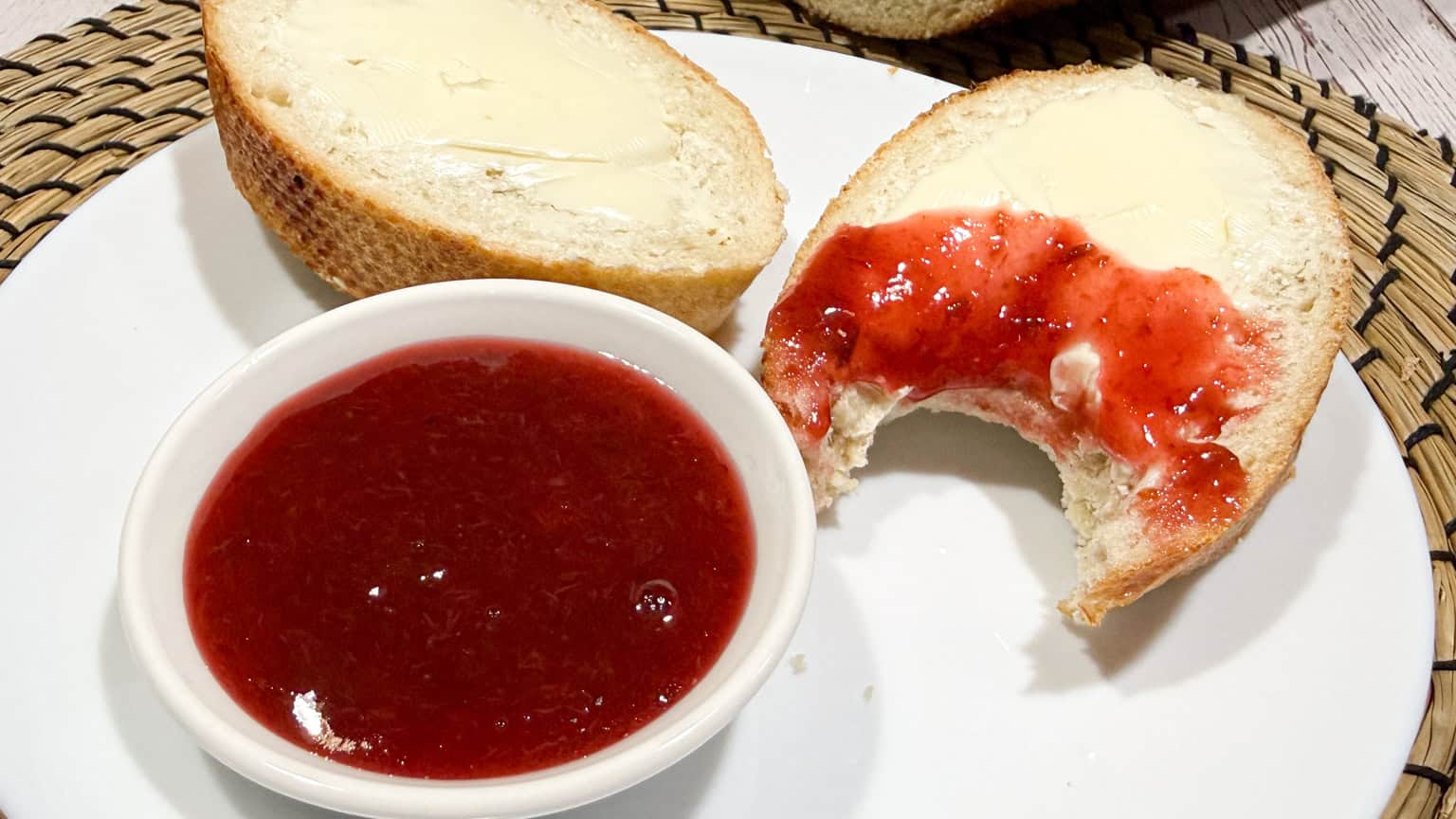
This homemade German plum jam is made with Zwetschgen (Italian plums) and sugar, simmered until thick and portioned into freezer-safe containers — no pectin, no canning equipment needed.
Remove from heat and let the jam cool completely in the pot.
This recipe is intended for freezer storage, not shelf-stable canning. The lemon juice amount here is for flavor and set, not calibrated for canning safety — for a canned version, use a tested recipe's lemon-juice-to-fruit ratio and proper water-bath processing times.