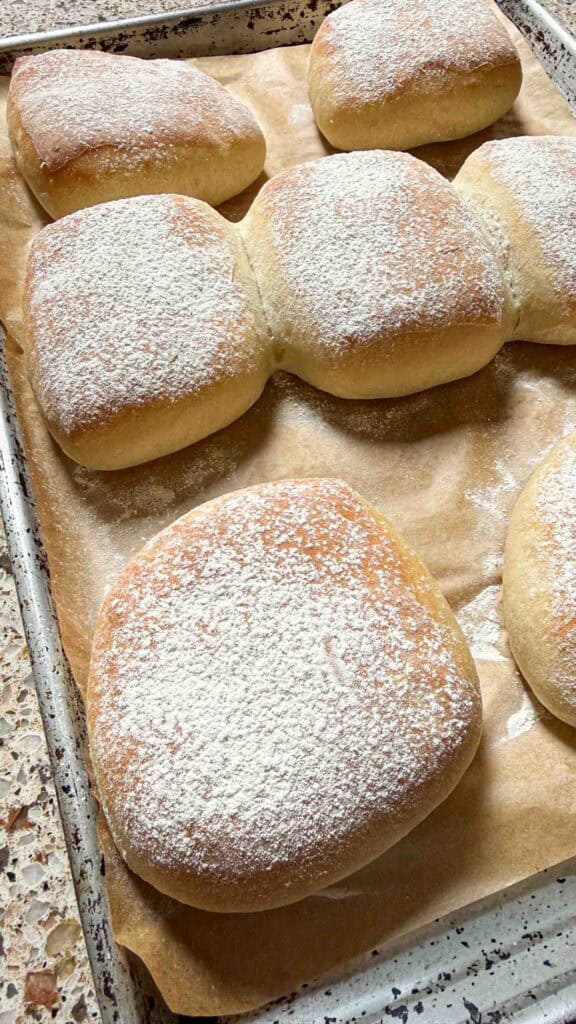
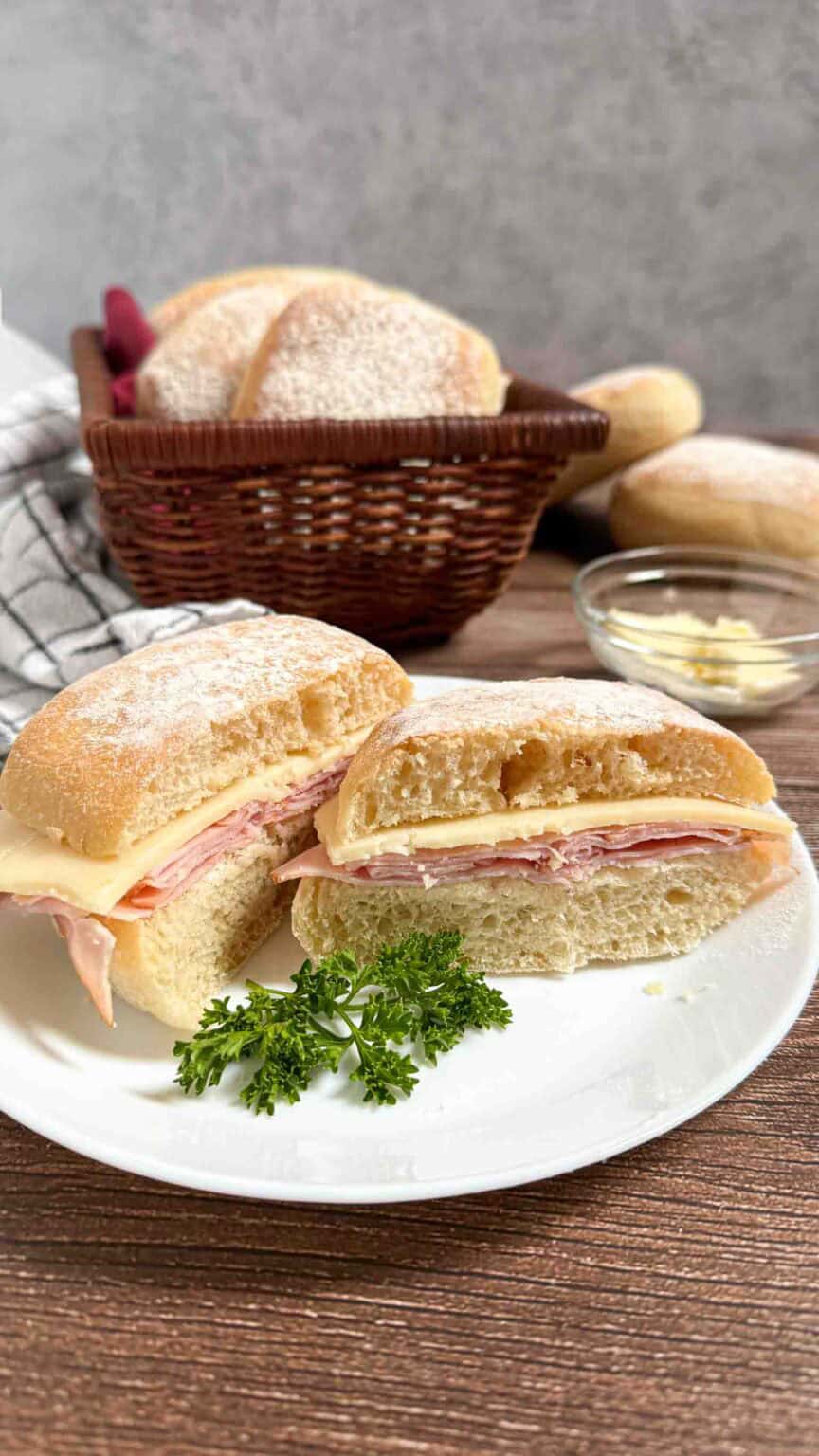
If you bake with sourdough, you know the struggle. Every time you feed your starter, you end up with a jar of discard and that little voice asking, "What am I going to do with all this?" Here's my answer: these golden, crusty sourdough discard ciabatta rolls. They're soft and chewy inside, crisp outside, and full of that gentle sourdough flavor.
Even better, you don't need a super active starter or days of waiting. A little bit of yeast does the heavy lifting, so you can have fresh, homemade ciabatta on the table the same day. Perfect for sandwiches, dipping in olive oil, or soaking up soup.
This is one of my favorite ways to put sourdough discard to good use. Here's why it's a keeper:
After years of training and working in professional bakeries, I still get excited every time fresh bread comes out of the oven.  There's just nothing like it. In Germany, fresh rolls (we call them Brötchen) are part of everyday life. People stop at the bakery in the morning and bring home a bag of warm rolls for breakfast.
These ciabatta rolls remind me a lot of that. They're simple, crusty, and best eaten the same day, ideally still a little warm with butter. And since I always seem to have a jar of sourdough discard in my fridge, this recipe gets made in my kitchen a lot.
Ciabatta (say it like "chuh-BAH-tuh") is an Italian bread known for its crisp crust and soft, chewy inside with airy holes. The name means "slipper" in Italian, because the flat, long loaves look a bit like a slipper.
Ciabatta is made with a wet, sticky dough. Instead of kneading it a lot, you use gentle stretches and long rests to build strength. This version uses sourdough discard for extra flavor and a little yeast to make sure it rises nicely every time.
This recipe is all about simple ingredients. Using a kitchen scale gives you the best results, since bread baking is all about exact amounts.
This bread takes a few hours from start to finish, but most of that time is just the dough resting while you do something else. Here's how to make it, step by step.
Step 1: Add the water. Pour the warm water into your mixing bowl.
Step 2: Add the discard. Gently pour the sourdough discard into the water. If your starter is active and bubbly, it may float on top, which shows it's lively and full of air. If it sinks, don't worry! The yeast in this recipe makes sure your bread still rises.
Step 3: Add the dry ingredients. Add the bread flour, salt, and yeast to the bowl.
Step 4: Mix the dough. Mix with the dough hook on your stand mixer for 3 to 5 minutes, until everything comes together into a soft, sticky dough. No mixer? Mix by hand with a sturdy spoon or your hand until no dry flour remains.
Step 5: First rise. Move the dough into a lightly oiled bowl. Cover it and let it rest for 1 to 1 ½ hours.
Step 6: Stretch and fold. With wet hands, grab one side of the dough, gently stretch it up, and fold it over the top. Turn the bowl a quarter turn and repeat until you've gone all the way around (4 times). This helps make the dough stronger without kneading.
Step 7: Second rest. Cover the bowl again and let the dough rest for another 2 hours. It should be puffy and full of bubbles.
Step 8: Shape the dough. Lightly flour your counter and gently tip the dough out. Carefully press or roll it into a rectangle about 14 inches by 10 inches. Be gentle so you don't push out all the air bubbles.
Step 9: Cut the rolls. Using a dough scraper or sharp knife, cut the dough into 7 to 9 rectangles of about the same size.
Step 10: Final rise. Place the rolls on a baking sheet lined with parchment paper, leaving space between them. Cover with a clean dish towel and let them rise until they're about doubled in size.
Step 11: Heat the oven. While the rolls rise, preheat your oven to 450°F.
Step 12: Dust and bake. Lightly dust the tops of the rolls with flour. Bake for 12 to 15 minutes, until golden brown and crusty.
Step 13: Cool. Move the rolls to a wire rack and let them cool before slicing. This keeps the bottoms from getting soggy.
Use wet hands, not more flour. Ciabatta dough is supposed to be sticky. It's tempting to add extra flour, but that makes the bread heavy and dense. Instead, dip your hands in water before you stretch and fold. The dough won't stick to wet hands, and your rolls will stay light and airy.
Once you've made the basic recipe, try mixing things up:
Ciabatta is best on the day it's baked, but it keeps well with a little care.
Here are the questions I get most about this ciabatta bread.
1️⃣ Can I use active sourdough starter instead of discard?
Yes! Active starter works great and may even give you a little more rise and flavor.
2️⃣ Do I really need the yeast?
For this recipe, yes. Sourdough discard usually isn't strong enough to rise bread on its own. The yeast makes sure your rolls rise every time.
3️⃣ Why is my dough so sticky?
That's normal for ciabatta! Wet dough is what creates those soft, airy holes inside. Use wet hands and a dough scraper to make it easier to handle.
4️⃣ Can I use all-purpose flour instead of bread flour?
You can, but the rolls will be softer and a little less chewy. Start with the lower amount of water, since all-purpose flour soaks up less.
There's something so rewarding about turning a jar of sourdough discard into a tray of golden, crusty bread. No waste, just warm, homemade rolls ready for your table. Slice one open while it's still a little warm, add a swipe of butter, and enjoy every crunchy, chewy bite.
Enjoy every bite,
Debbie
These easy sourdough discard ciabatta rolls have a crisp crust and soft, chewy inside. Made with five simple ingredients and ready the same day.


