
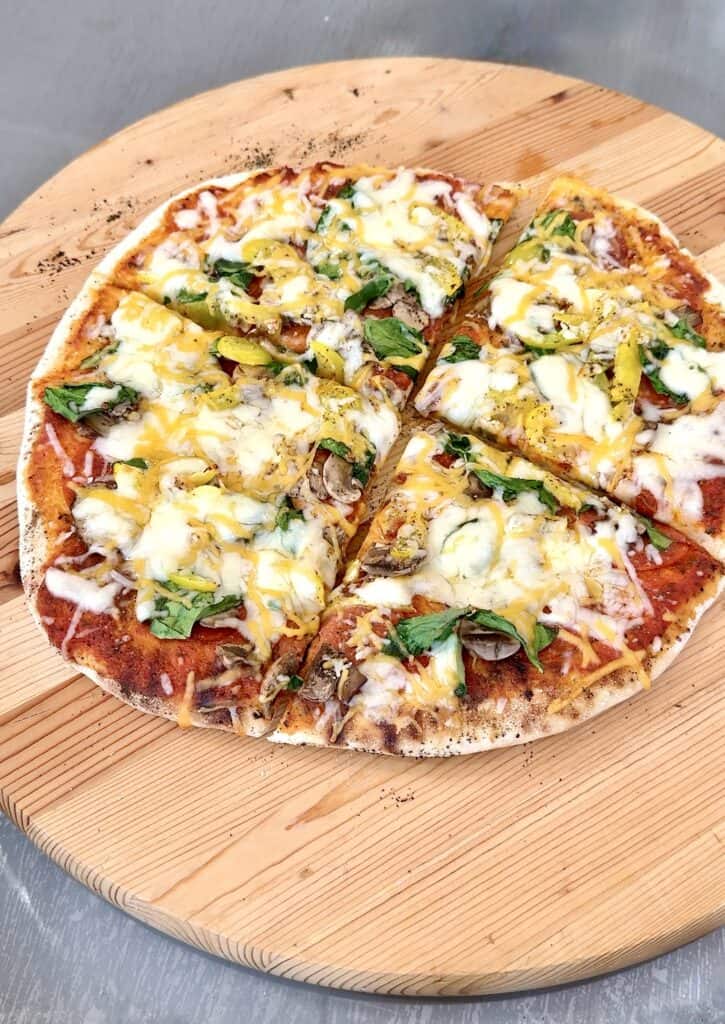
Let me tell you something I am not particularly proud of. Growing up in Germany, my parents took my brother and me to Italy regularly — often for summer vacation. The food, the warmth, the culture, the pizza fresh out of a wood-fired oven. And I, as a child, thought it was boring.
I would like to insert a face palm here. Because I could absolutely slap my head for that now.
What I wouldn't give to go back to those summers — to sit at a table in Italy with a pizza in front of me, the smell of the wood fire, the herbs, that crust. Once you've tasted a real Italian pizza, nothing else quite measures up. Not restaurant pizza here, not frozen pizza, not even homemade pizza baked in a regular oven. There's something about that heat, those herbs, that philosophy of simplicity that is almost impossible to recreate.
Almost.
This isn't your average backyard pizza night. Here's why this method is worth doing right.
My parents believed in traveling. Every summer, we packed up and headed south — my brother, my parents, and me — usually to Italy.

As a kid, I didn't fully understand what I had. Italy felt like just another vacation destination, warm and a little slow, full of old things and unfamiliar food.
I know. Face palm.
What I do remember, even then, is the pizza. Not because I appreciated it the way I do now, but because it was impossible not to notice. The smell coming out of those restaurants — wood smoke and fresh herbs and something caramelized and bubbling — stopped you on the street. The crust had this char on it, blistery and crisp at the edges but somehow still soft and airy inside. The toppings were minimal. The sauce was barely cooked. A few leaves of basil were laid on top right at the end. A drizzle of olive oil.
It ruined me for every other pizza. I just didn't know it yet.
Years later, living in Oregon, I started trying to chase that memory. Oven pizza never got me there — the temperature just isn't high enough; the results are always a little soft, a little pale, a little safe. So I turned to my gas grill. I tested, adjusted, tinkered — honestly, that's the only word for it — until I got somewhere real. Not Italy. I won't pretend it's Italy. But closer than I ever thought possible in a home kitchen.
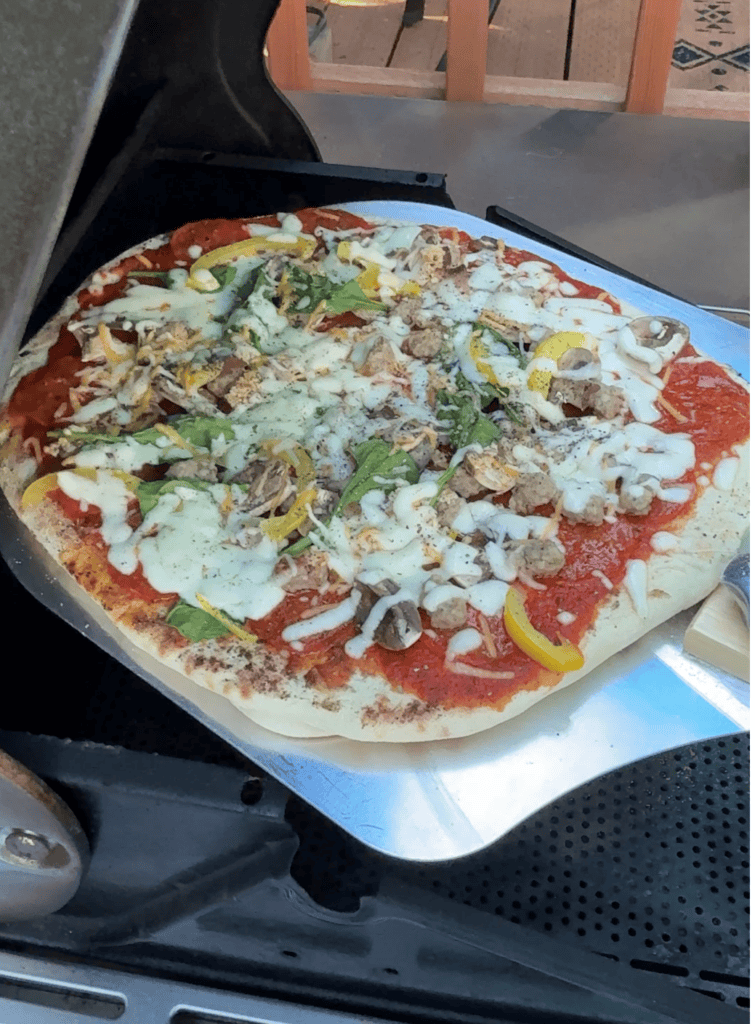
What matters most is the heat and the patience. Get both of those right, and something genuinely special happens.
I hope one day I can go back to Italy and taste the real thing again. Until then, this grill and these herbs will have to do — and honestly, they're doing a pretty remarkable job.

Before we get into the method, it helps to understand what you're actually chasing. Authentic Italian pizza — particularly Neapolitan style — is built on four fundamental pillars, and they're all simpler than you'd expect.
Barely cooked tomato sauce. Italians don't simmer their pizza sauce for hours. They use high-quality crushed San Marzano tomatoes, a pinch of sea salt, and a splash of olive oil — raw. That's it. The heat of the oven does the cooking.
Minimal toppings. Authentic Italian pizzas are not loaded. A classic Margherita has crushed tomatoes, fresh mozzarella, basil, and extra virgin olive oil. That's four ingredients. The restraint is the point — every element needs to stand on its own.
Extreme heat. Authentic Neapolitan pizzas are baked at 800°F to 900°F for just 60 to 90 seconds. That flash-bake is what creates the characteristic blistered crust — crisp and charred on the outside, soft and airy within.
Extra virgin olive oil. A generous drizzle of good quality, fragrant olive oil — either just before the pizza goes on the heat or right as it comes off — ties everything together and adds that unmistakable richness.
Keep these four things in mind and you'll understand why this grill method works as well as it does.
If there's one thing that will take your grilled pizza from "really good" to "this tastes like Italy," it's the herbs. Don't skip them, don't substitute dried for fresh where it matters, and don't overdo it.
For the dough:
A few things that make the grilling process smoother and safer.
Read through the whole method before you start — the grill moves fast and you want to be ready.
Make the dough:
Grill the pizza:
5. Heat your grill to at least 550°F to 600°F with the lid closed. The hotter the better — 800°F is ideal if your grill can get there.
6. Carefully lay the rolled-out dough directly onto the hot grill grates. Close the lid and bake for 1 minute — no more than 90 seconds. This pre-bakes one side and gives the crust enough structure to hold your toppings without breaking.
7. Remove the dough from the grill and flip it over so the grilled side faces up.
8. Working quickly, add your sauce, toppings, cheese, and herbs to the grilled side.
9. Return the pizza to the grill, close the lid, and cook until the crust is blistery and charred at the edges — not black, but genuinely crisp — and the cheese is melted and bubbling. Crank the heat as high as your grill will go for this step. 800°F is the target. 10. Remove from the grill, add fresh basil leaves and a drizzle of extra virgin olive oil, slice, and serve immediately.
Part of the joy of grilled pizza is making it your own. Here are some classic and creative combinations to inspire you.
The classics:
A little more adventurous:
Keep it simple — the Italian way: Remember the four pillars. Less is more.
A pizza with three great ingredients will always outshine one piled high with
ten average ones.
Years of grill testing distilled into the things that matter most.
Once you have the basic method down, the possibilities are endless.
Grilled pizza is really a make it and eat it right now kind of meal — but here's what to know if you have leftovers.
1️⃣ Do I need a special pizza grill or stone?
No — direct grill grates work perfectly and actually give you better char than a stone on a regular grill. The direct heat is the whole point.
2️⃣ What if my grill doesn't get to 800°F?
550°F to 600°F will still give you a great result — just give the second bake a little more time. The higher the heat the closer to Italian, but don't let perfect be the enemy of delicious.
3️⃣ Can I use store-bought pizza dough?
Yes — store-bought dough works fine with this method. Let it come fully to room temperature before rolling out so it stretches easily.
4️⃣ Why do I pre-bake the dough before adding toppings?
That first 60 to 90 seconds on the grill gives the crust enough structure to hold toppings without breaking or going soggy. Don't skip it.
5️⃣ Can I make the dough ahead of time?
Absolutely — make it the night before and let it rise slowly in the fridge overnight. A cold, slow rise actually develops more flavor in the dough. Take it out 30 minutes before rolling to come to room temperature.
6️⃣ What's the best cheese for grilled pizza?
Fresh mozzarella is the classic Italian choice and melts beautifully. Low-moisture mozzarella works well too and is less watery. A mix of mozzarella and provolone is a personal favorite.
Pizza on the grill is an event, not just a meal — and in our house, it has become exactly that.
My daughter Jennifer requests this regularly. Not occasionally, regularly. And I'll be honest — grilled pizza is my domain. Manny is the undisputed grill master when it comes to meat, but pizza? That's mine. He knows it, the family knows it, and anyone lucky enough to be at our table on a grilled pizza night knows it too.
What we do is set up a full topping station right in the kitchen — every ingredient laid out, sauces, cheeses, herbs, all of it — and everyone builds their own. Family, friends, it doesn't matter. You get your rolled out dough, you choose your toppings, and I handle the grill. It turns dinner into an experience, and people talk about it long after the evening is over.
Here are a few more ways to round out the meal:
I may never have appreciated those summer trips to Italy the way my parents hoped I would. But somewhere along the way, between the memories and the grill experiments and the herbs, I found my way back to those flavors. This pizza won't take you to Italy — but on a warm Oregon evening with the grill cranked up and fresh basil on hand, it gets closer than you'd think.
I hope you try it. And I hope one day I make it back to Italy to taste the original again.
The full grilling process is up on the YouTube channel — especially worth watching for the pre-bake step and how to read the crust for doneness.
Enjoy every bite,
Debbie
This easy grilled pizza recipe uses homemade dough, high heat, and simple Italian-inspired ingredients to create a crispy, charred crust and perfectly melted toppings. Cooked directly on the grill, it delivers the smoky flavor and texture of wood-fired pizza right in your own backyard.
The 60 to 90 second pre-bake before adding toppings is non-negotiable — it prevents the dough from breaking under the weight of the toppings.Get your grill as hot as possible — 800°F is ideal for an authentic blistery crust.Add fresh basil after grilling, never before — the heat releases the oils without burning the leaves.Less is more with toppings — overloading prevents the crust from crisping properly.Store leftover pizza in the fridge for up to 3 days. Reheat in a hot skillet to keep the crust crispy.